Now Reading: Swim, Hike & Kayak: 10 Best Adventure Activities for 2026
- 01
Swim, Hike & Kayak: 10 Best Adventure Activities for 2026

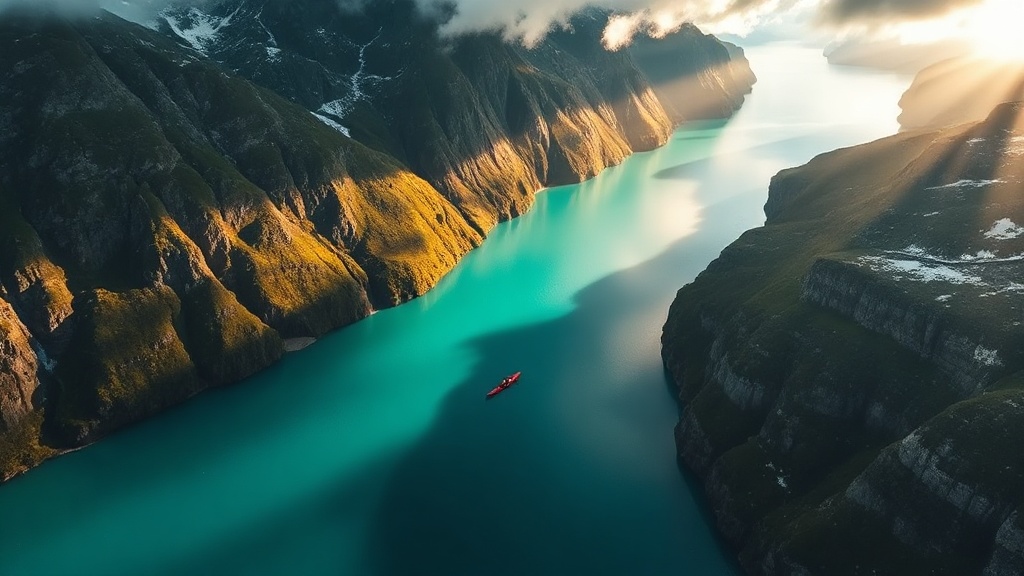
If you’re going to spend money on airfare in 2026, spend it on experiences that actually change you — and these ten adventure activities earn that fare several times over.
Adventure travel has shifted from a niche obsession into one of the fastest-growing flight-booking motivators. Airlines have noticed: routes to Queenstown, Tromsø, and Patagonia are seeing more capacity added for 2026 than at any point since 2019. That means competitive fares, more departure options, and less excuse to stay home.
Here’s what’s worth your time, your miles, and your money this year.
1. Sea Kayaking the Milford Sound, New Zealand
Milford Sound in Fiordland National Park is one of the few places on the planet where you can paddle through a fiord and feel genuinely small. The walls rise over 1,200 metres on both sides, waterfalls cascade directly into your path, and if you’re lucky, a pod of bottlenose dolphins shows up uninvited.
Logistics: Fly into Queenstown Airport (ZQN) — Air New Zealand operates direct from Auckland (AKL) in roughly 1 hour 40 minutes. From there, it’s about a 4-hour drive or a scenic charter flight to Milford Sound.
- Best window: October–April, with February and March offering calmer morning water
- Half-day guided kayak tours run $95–$130 USD per person
- Overnight kayak-and-camping combos hit around $350–$450 USD
Honest tradeoff: Milford Sound gets about 182 rain days a year. Rain actually makes it more dramatic (more waterfalls), but if you need sunshine for photos, book the morning slot in February when clear days are most frequent.
2. Wild Swimming in the Westfjords, Iceland
The Westfjords region of Iceland is where the crowds aren’t — yet. The Dynjandi waterfall area offers plunge pools cold enough to genuinely take your breath away (around 4–8°C in summer), and the landscape is so open and silent it feels like you’ve landed on a different planet.
Logistics: Fly into Reykjavik Keflavik (KEF), then take a domestic flight on Eagle Air to Bíldudalur Airport — total domestic leg is under an hour. International fares from the US East Coast to KEF regularly dip below $500 round-trip if you book January through March for summer travel.
- Best window: June–August for light and manageable water temperatures
- No tour required — the pools are free and accessible by rental car
- Pair with a guided sea-swimming session out of Ísafjörður for around $80 USD
Honest tradeoff: Getting to the Westfjords adds cost and time vs. staying in the Golden Circle. It’s worth it, but if your trip is under 7 days, the logistics eat too much of your itinerary.
3. Multi-Day Hiking the Laugavegur Trail, Iceland
While we’re in Iceland — the Laugavegur Trail runs 55 km from Landmannalaugar to Þórsmörk and is arguably the most accessible multi-day alpine hike in the Northern Hemisphere. It threads through obsidian lava fields, bright rhyolite mountains, and glacial river crossings.
- Huts book up fast; reservations open in January each year via the Icelandic Touring Association
- Hut fees run $70–$110 USD per night per person depending on the hut
- Most hikers complete it in 4 days at a comfortable pace
This trail works beautifully back-to-back with the Westfjords swim above — fly into KEF, spend a week in the Westfjords, then close out with the Laugavegur.
4. White-Water Kayaking on the Futaleufú River, Chile
The Futaleufú — known simply as the “Fu” among kayakers — is one of the most technically demanding river runs in the world. Class IV and Class V rapids through deep turquoise water in northern Patagonia. Even if you’re not an expert, the Fu offers guided inflatable raft trips that put you in the middle of it all.
Logistics: Fly into Santiago (SCL), then connect to Balmaceda (BBA) or Puerto Montt (PMC) — LAN Chile (now LATAM) covers both routes. From there, a shuttle or rental car gets you to the river in 3–5 hours.
- Guided multi-day kayak camps (July–December season): $1,500–$2,500 USD for 5 days, all-inclusive
- Best months: November–February for peak water levels and warmest weather
Honest tradeoff: The Fu demands more budget and planning than most entries on this list. It’s not the right trip if you’re piecing together a larger South America itinerary on a tight timeline — this deserves its own dedicated trip.
5. Hiking the Overland Track, Tasmania, Australia
The Overland Track covers 65 km through Cradle Mountain–Lake St Clair National Park and is consistently rated among the world’s top long-distance hikes. It passes alpine meadows, ancient pencil pines, and more platypus sightings than you’d expect.
Logistics: Fly into Launceston (LST) or Hobart (HBA) from Melbourne (MEL) — Jetstar and Virgin Australia both serve the route for typically under $100 AUD one-way. Transfers to Cradle Mountain from Launceston take about 2.5 hours.
- Hiking season: October–May; the park enforces directional walking (north to south) during peak season
- Booking fee: $200 AUD per person for the peak-season permit
- Average completion time: 5–6 days
6. Surfing and Stand-Up Paddleboarding in Siargao, Philippines
Siargao’s Cloud 9 wave is one of the most photographed reef breaks in Southeast Asia, but the island offers far more than expert surf. The lagoons around Sugba and the mangrove channels are ideal for stand-up paddleboarding at any skill level, and glassy morning conditions from March to October make it genuinely beginner-friendly.
Logistics: Fly into Sayak Airport (IAO) via Cebu (CEB) on Cebu Pacific or Philippine Airlines. Fares from Manila to Siargao typically run $30–$70 USD round-trip when booked 6–8 weeks out.
- SUP rentals: $8–$15 USD per hour
- Surf lessons with a local instructor: $25–$40 USD for 2 hours
- Best time: March–October for calmer conditions and cleaner swells
Honest tradeoff: November through February is typhoon season. Flights get cancelled, swells get chaotic. Unless you’re an experienced surfer chasing big waves, shift your dates.
7. Via Ferrata Climbing in the Dolomites, Italy
Via ferrata routes — literally “iron paths” — bolt fixed cables, rungs, and ladders into alpine rock faces so non-technical climbers can reach vertical terrain safely. The Dolomites around Cortina d’Ampezzo have the densest network in the world, with routes graded from family-friendly to genuinely exposed.
Logistics: Fly into Venice Marco Polo (VCE) or Innsbruck (INN). Venice is typically the cheaper option — transatlantic fares from New York JFK to VCE can be found under $700 round-trip in shoulder season (May and September). From Venice, Cortina is about 2.5 hours by bus or rental car.
- Via ferrata equipment rental: $25–$40 USD per day
- Guided half-day routes: $80–$150 USD per person
- Best window: June–September when routes are snow-free
8. Sea-to-Summit Hiking in the Azores, Portugal
São Miguel island in the Azores packs a volcano hike, lake swimming, and coastal trail running into a single island roughly 65 km long. The Sete Cidades caldera — two lakes in a volcanic crater — can be circled on foot in about 6 hours, with an optional swim at the base.
Logistics: Fly into João Paulo II Airport (PDL) — direct flights from Boston Logan (BOS) on SATA/Azores Airlines run 5.5 hours and frequently hit $400–$600 round-trip during spring and fall. The Azores are genuinely one of the best long-haul values from the US East Coast in 2026.
- Best hiking months: April, May, September, October
- Most trails are free; hire a guide for the interior calderas for $50–$90 USD
- The island’s geothermal hot springs (Ponta da Ferraria) are free at low tide
Honest tradeoff: The Azores get a lot of cloud cover in summer — June through August can feel persistently grey. The shoulder months above give you better visibility for the crater views that make the hike worth doing.
9. Open-Water Swimming at the Whitsundays, Australia
The Whitsundays sit inside the Great Barrier Reef and offer snorkelling and open-water swimming in conditions that rarely disappoint. Whitehaven Beach — accessible only by boat or seaplane — has water clarity that makes snorkelling feel effortless even for non-swimmers.
Logistics: Fly into Proserpine/Whitsunday Coast Airport (PPP) or Hamilton Island (HTI) from Brisbane (BNE) or Sydney (SYD) on Qantas or Jetstar. Fares from Sydney typically land under $150 AUD one-way.
- Guided full-day snorkel tours from Airlie Beach: $120–$180 AUD
- Best months: June–October to avoid jellyfish season (box jellyfish peak November–May)
- Stinger suits are provided by most operators — always use one
10. Kayak Touring the Inside Passage, Alaska/Canada
The Inside Passage stretches roughly 1,500 km from Puget Sound to Southeast Alaska, and kayaking sections of it — even just a 3–5 day self-supported stretch near Juneau or Ketchikan — is one of the great waterway experiences left in North America. Orca sightings are common in July and August. Bald eagles are so frequent they stop being exciting after day two.
Logistics: Fly into Juneau International (JNU) — Alaska Airlines runs regular service from Seattle (SEA), with round-trip fares typically $250–$400 USD. Kayak rentals and shuttle logistics out of Juneau are well-organised through a handful of outfitters.
- Best window: Mid-June through August
- Single-kayak rental: roughly $55–$75 USD per day
- Guided 5-day tours: $1,200–$1,800 USD, including camping gear and food drops
Honest tradeoff: Going self-supported on the Inside Passage requires real navigation and weather-reading skills. If you haven’t kayak-toured before, book a guided trip for your first run — the tides and currents can turn dangerous fast.
How to Book Flights for Adventure Travel in 2026
A few things that actually work when you’re chasing these experiences:
- Book shoulder-season flights first, then plan activities around them. Airlines price the transport; you control the timing. Saving $300 on airfare to Queenstown or Keflavik often means booking April vs. December.
- Use multi-city itineraries when combining destinations. The Iceland swim + hike combo (entries 2 and 3) books more cheaply as a single round-trip into KEF than two separate searches.
- Set fare alerts on Google Flights for your target routes at least 90 days out. For long-haul routes like JFK–SCL or BOS–PDL, drops of $150–$200 off standard fares happen several times a year.
- Check whether adventure operators have partner airlines. Several Patagonia and Alaska outfitters have informal relationships with regional carriers for gear transport allowances — worth a quick email before you book.
Ready to start? Pick the one activity on this list that you’ve been putting off the longest — that’s the trip to book first. Open Google Flights right now, drop in your nearest hub and the destination airport listed above, and set a 90-day alert. Decisions made in the next 30 minutes tend to actually happen. The ones you leave for “someday” rarely do.