Now Reading: 7 Iconic Food Markets in Europe You Need to Visit in 2026
- 01
7 Iconic Food Markets in Europe You Need to Visit in 2026

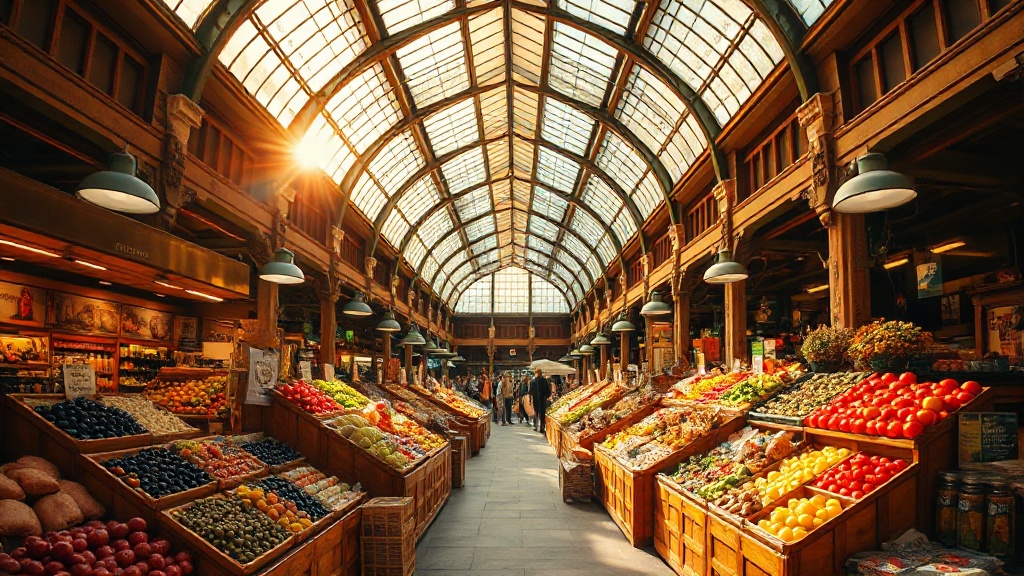
7 Iconic Food Markets in Europe You Need to Visit in 2026
Flying somewhere specifically to eat is one of the best travel decisions you can make — and Europe’s food markets give you a legitimate excuse to do it on a budget.
These seven markets aren’t just tourist stops. They’re working commercial spaces where locals shop, chefs source ingredients, and the food is good enough to restructure a whole trip around. I’ve pulled together the best of them for 2026, plus realistic flight intel so you can actually get there without overpaying.
1. La Boqueria, Barcelona — Spain’s Most Famous (and Most Debated) Market
Fly into: Barcelona El Prat Airport (BCN)
La Boqueria on La Rambla has taken heat in recent years for becoming too touristy, and honestly, some of that criticism is fair. The front stalls near the entrance are geared toward snap-happy visitors, and prices reflect it. But push 20 meters past the fruit smoothie stands into the interior, and you’re still looking at one of the finest collections of charcuterie, seafood, and Catalan cheese in southern Europe.
The tradeoff: peak summer (June–August) is genuinely overwhelming here. Go in February or March 2026 instead — the market is quieter, Barcelona is under 15°C, and transatlantic flights from the US East Coast frequently dip below $500 round-trip on carriers like Iberia and Norse Atlantic.
What to actually buy
- Jamón ibérico de bellota, vacuum-packed for the flight home
- Fresh-shucked oysters at the seafood counters (under €3 each)
- Morcilla and fuet from the interior butchers — far cheaper than the entrance stalls
2. Mercado de San Miguel, Madrid — Tapas Counter Culture
Fly into: Adolfo Suárez Madrid–Barajas Airport (MAD)
Mercado de San Miguel is a different animal from La Boqueria. It’s not a grocery market — it’s a curated indoor tapas hall a five-minute walk from Plaza Mayor, and it leans into that identity without apology. You’ll pay a little more per bite (expect €2–4 per pincho), but the curation is exceptional and the standing-room format encourages you to graze through three hours without noticing.
Madrid is one of Europe’s most reachable cities. American Airlines, Iberia, and Air Europa all fly direct from New York JFK, and during the low season shoulder window of October–November 2026, round-trip fares often land under $600. From within Europe, budget carrier Vueling connects Madrid to over 50 European cities, frequently for under €50 one-way.
Honest tradeoff: San Miguel isn’t where Madrileños do their weekly shopping — it’s a premium experience. If you want raw market atmosphere over polished tapas bars, combine it with a morning visit to the nearby Mercado de la Cebada, which is the real neighborhood market for the La Latina district.
3. Borough Market, London — The One That Started the Artisan Food Trend
Fly into: London Gatwick (LGW) or London Heathrow (LHR)
Borough Market near London Bridge has been operating in some form since the 12th century, which makes most “artisan” food markets look like pop-up events. Today it’s a serious 100+ stall operation with dedicated wholesale mornings (Tuesday–Thursday, 8am–5pm) and the famous full retail weekends (Thursday–Saturday).
Getting to London has never been easier or cheaper from the US. Norwegian, Level, and various charter operators have kept transatlantic pressure high, and fares from Boston Logan (BOS) to LGW regularly dip under $450 round-trip when booked at least 8 weeks in advance. From continental Europe, the Eurostar from Paris Gare du Nord to London St Pancras takes about 2 hours 15 minutes — often cheaper than flying once you factor in airport time.
Don’t miss in 2026
- Neal’s Yard Dairy counter — the clothbound Cheddar is worth the queue
- Bread Ahead doughnuts (yes, they’re worth the hype)
- The wild mushroom and game stalls that appear September–November
4. Torvehallerne, Copenhagen — Scandinavia’s Sharpest Food Hall
Fly into: Copenhagen Airport Kastrup (CPH)
Torvehallerne opened in 2011 and immediately set the benchmark for what a modern covered food market should look like. Two glass halls at Israels Plads house about 60 stalls — coffee roasters, smørrebrød counters, fresh pasta, Nordic charcuterie — with a clarity of curation that feels almost architectural.
Copenhagen is notoriously expensive, and Torvehallerne is no exception. Budget €10–15 for a solid lunch here; this is not a budget-eating destination. What you’re paying for is quality that’s hard to replicate elsewhere: gravlax cured in-house, skyr with local berry compote, open-faced rye sandwiches assembled to order.
Flight intel: SAS and Scandinavian budget carrier Norwegian both fly direct from several US cities. From London, easyJet and British Airways offer the LHR/LGW–CPH route for as little as £40–£80 one-way during January and February 2026. Flying mid-week cuts fares by an average of 15–20% on this route.
The honest tradeoff: Torvehallerne closes relatively early (most stalls wrap up by 7pm, some by 6pm) and is closed on Sundays after 3pm. Plan your arrival day accordingly or you’ll be staring at metal shutters after a long travel day.
5. Marché Provençal, Antibes — The South of France at Its Most Edible
Fly into: Nice Côte d’Azur Airport (NCE)
The Marché Provençal in Antibes’ old town operates every morning except Monday, and on a Tuesday in late spring it’s one of the most sensory-rich food experiences you’ll find in France. Provençal olive oils, local rosé, tapenade, lavender honey, and at least a dozen varieties of olives — all within a covered 16th-century market hall that’s been doing this longer than most countries have had constitutions.
Nice Côte d’Azur is well-served by European budget carriers. easyJet dominates the London–Nice route (Gatwick to NCE), with fares frequently under £60 one-way when booked in advance for spring 2026. From Paris, the TGV Marseille–Nice takes around 2.5 hours and is often the smarter choice over flying once you’re already in France.
Best timing: April and May 2026, before the Riviera summer crowds arrive and prices haven’t yet spiked. Market vendors start packing up around noon, so arrive by 9am.
6. Naschmarkt, Vienna — 1.5 km of Everything
Fly into: Vienna International Airport (VIE)
Vienna’s Naschmarkt stretches roughly 1.5 kilometers along the Wienzeile and has been the city’s main open-air food market since the 16th century. It’s a genuinely mixed environment: Turkish spice vendors beside Austrian wine merchants beside Japanese food importers beside schmaltz-heavy Viennese Würstelstände. On Saturday mornings, a flea market section adds another dimension entirely.
This is one of the best-value food markets in central Europe. A quality Bratwurst with mustard and a bread roll will run you under €4. A full box of Austrian Gemischter Satz wine grapes pressed into a bottle costs under €10 from vendors who know their product.
Getting there: Vienna is one of Europe’s best-connected hubs. Austrian Airlines (part of Lufthansa Group) flies direct from Chicago O’Hare, New York JFK, and Washington Dulles. From within Europe, Ryanair connects VIE to dozens of cities for under €40 one-way on many routes. Booking 6–8 weeks out is typically the sweet spot for European budget fares.
Naschmarkt by section
- Western end (near Kettenbrückengasse U-Bahn): Flea market, vintage goods, antique tableware
- Middle stretch: Fresh produce, fish, meat — the working market core
- Eastern end (near Karlsplatz): Restaurant stalls and sit-down eateries
7. Mercato Centrale, Florence — Italy’s Best Covered Market
Fly into: Florence Airport Amerigo Vespucci (FLR) or Pisa International (PSA)
Florence’s Mercato Centrale operates on two floors in a stunning 19th-century cast-iron building near San Lorenzo. The ground floor is a working food market — butchers, fishmongers, cheese counters, fresh pasta vendors — open since 6am for locals doing their shopping. The upper floor, added in a 2014 renovation, is a high-end food court with artisan producers and a full bar.
My honest take: the upper floor is good but it’s the ground floor that earns the visit. Get there before 10am on a weekday and it feels nothing like a tourist attraction — it feels like a city doing its morning routine.
Flight options: FLR is a small airport with limited long-haul options. Most transatlantic travelers fly into Rome Fiumicino (FCO) or Milan Malpensa (MXP) and connect. From London, Ryanair flies London Stansted (STN) to PSA (Pisa, 80km from Florence by train) for frequently under £35 one-way. The Pisa Centrale to Florence Santa Maria Novella train takes around 1 hour and costs under €10.
Tradeoff: Mercato Centrale’s ground floor closes at 2pm Monday–Saturday and is shut on Sundays entirely. The upper food court keeps longer hours, but that’s not the reason to be there. Early morning or nothing.
How to Build a Food Market Flight Plan for 2026
If you’re thinking about stringing two or three of these into a single trip, here’s what works geographically:
- Iberian pair: Barcelona + Madrid (fly into BCN, out of MAD, or vice versa — one-way fares between the two cities start around €25 on Vueling or Iberia Express)
- Alpine loop: Vienna + Florence (VIE to FLR via Milan is a reasonable routing; check Austrian Airlines or ITA Airways connections)
- Northern circuit: London + Copenhagen (Eurostar to London, then fly LHR/LGW to CPH — this entire two-city trip can cost under $700 all-in from the US East Coast in shoulder season)
- Riviera standalone: Antibes/Nice makes the most sense as an add-on to a Paris trip; Paris–Nice TGV is around €50–80 booked ahead
Booking timing that actually saves money
- Transatlantic: Book 2–5 months ahead; January–March 2026 departures are typically cheapest
- Intra-Europe: Book 4–8 weeks out for budget carriers; flexibility on day of week saves 15–25%
- Avoid: July and August at every one of these markets — crowds, heat, and prices all peak simultaneously
Your Next Step
Pull up Google Flights right now and run an “explore” search for your nearest major airport to either BCN, MAD, CPH, or VIE — set the date range to February or March 2026 and sort by price. You’ll almost certainly find a round-trip under $600 from the US or under £100 from the UK. Set a price alert on that route tonight, because transatlantic fares to Europe tend to drop 6–8 weeks before departure for unsold seats. That’s your window.