Now Reading: 7 Smart Ways to Protect Your Passport and Cards While Traveling
- 01
7 Smart Ways to Protect Your Passport and Cards While Traveling
7 Smart Ways to Protect Your Passport and Cards While Traveling
Passport theft and card skimming are two of the most disruptive things that can happen mid-trip — and both are largely preventable with a few deliberate habits before you leave home.
I’ve had a card compromised at an ATM in Rome and watched a fellow traveler spend three days at the U.S. Embassy in Bangkok sorting out a stolen passport. Neither situation needed to happen. The fixes aren’t expensive or complicated, but you do have to actually do them before you board.
Here’s what works in 2026.
1. Make Digital and Physical Copies of Your Passport Before You Fly
This is the single highest-leverage thing you can do, and it takes about four minutes.
- Scan or photograph the photo/data page of your passport (the page with your photo, passport number, and expiry date).
- Upload it to a password-protected cloud folder — Google Drive, iCloud, or Dropbox all work. Do not rely on email, which can be accessed if your password is weak.
- Email a copy to a trusted person at home who can read it to you over the phone if your phone is also stolen.
- Print one physical copy and store it separately from your actual passport — in a checked bag or a hotel safe, not in the same wallet or backpack.
If your passport is stolen, the U.S. State Department or your country’s embassy will need that passport number to expedite a replacement. Having it on hand can reduce a multi-day ordeal to same-day processing. The U.S. Embassy in most major cities offers emergency passport services, but they move faster when you already know your document number.
Honest tradeoff: Cloud storage is convenient but not impenetrable. Use a strong, unique password and enable two-factor authentication on whichever service you choose. The convenience-security balance here still tilts heavily toward storing a copy digitally.
2. Use an RFID-Blocking Wallet or Sleeve
Most passports issued after 2007 and the majority of credit cards issued after 2015 contain RFID chips. In theory, a thief with a reader can scan your card data from a few inches away without touching you. In practice, documented RFID theft in the wild remains relatively rare — but it does happen in high-density transit environments like airport security queues and metro trains.
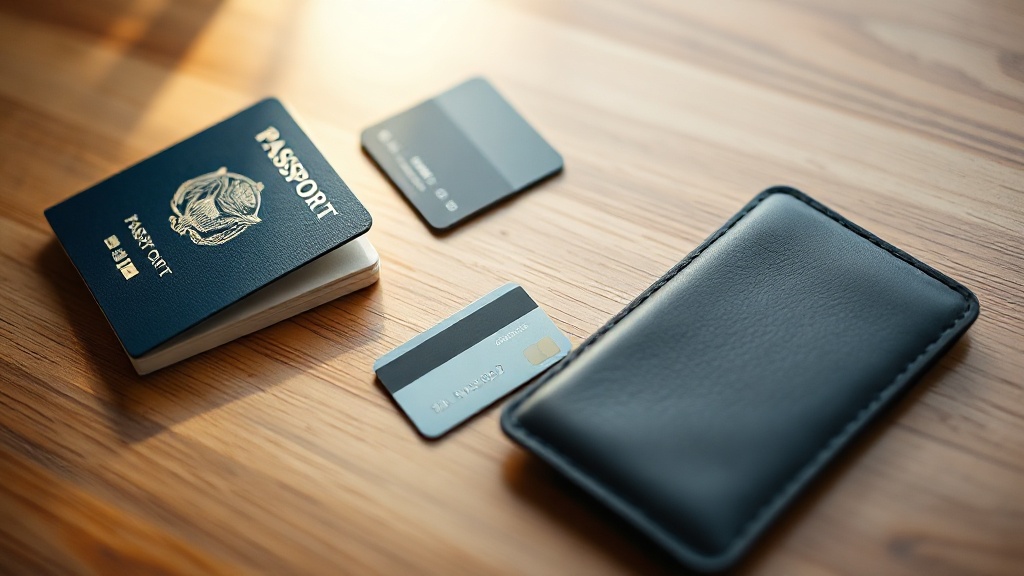
An RFID-blocking wallet or sleeve creates a Faraday cage that prevents that scan from succeeding. You don’t need to spend a lot here:
- Dedicated RFID passport sleeve: typically $5–$15 on Amazon or in any travel store.
- RFID-blocking bifold wallet: solid options from brands like Travelambo or Ekster run $20–$45.
- Whole-bag RFID lining: some travel backpacks (like those from Patagonia or Osprey) include this, though it adds cost to the overall bag price.
I use a $12 sleeve for my passport and a slim RFID wallet for my cards. It’s one of those setups where the cost-to-peace-of-mind ratio is genuinely hard to argue with.
3. Carry Only What You Need Each Day
This one sounds obvious, but most travelers don’t actually do it.
Your passport is required for international border crossings and some hotel check-ins, but you don’t need to carry it to a museum or a dinner reservation. In many countries, a photographed copy on your phone or a secondary ID is accepted for daily interactions.
A practical daily carry system:
- Leave your passport in the hotel safe whenever the hotel has one.
- Carry one primary credit card and one debit card — not all four cards in your wallet.
- Keep a small amount of local cash (typically the equivalent of $40–$60 USD) separate from your main wallet — in a front pocket, a money belt, or a hidden pocket in your jacket.
- If your accommodation lacks a safe, use the front desk safe or invest in a portable travel safe (the Pacsafe FlexSafe retails for around $60 and anchors to fixed objects with a cable lock).
Honest tradeoff: Leaving your passport at the hotel means you’re without it if you unexpectedly need it — say, to cash a traveler’s check or cross a spontaneous border. Weigh that against the much higher cost of losing it entirely.
4. Use a Money Belt or Hidden Neck Pouch in High-Risk Areas
Money belts get mocked because they’re awkward to access in public and slightly uncomfortable in hot weather. They’re still worth it in specific situations.
High-pickpocket-risk environments in 2026 include:
- Crowded metro systems — particularly in Barcelona (Lines 2 and 5), Rome (Line A), and Prague’s central stations.
- Major tourist landmarks at peak hours — think the Trevi Fountain in July or the Eiffel Tower esplanade on any weekend.
- Airport transit zones and bus stations in Southeast Asia and South America.
- Overnight trains, especially in Eastern Europe and India.
In these contexts, a flat money belt worn under your shirt, holding your passport and one emergency card, provides a meaningful layer of protection that a cross-body bag simply doesn’t. A basic nylon money belt costs $10–$20 at any travel retailer.
For everyday situations in lower-risk cities, a cross-body bag worn in front of your body accomplishes most of what a money belt does with far less inconvenience.
5. Set Up Travel Notifications and Spending Alerts on Every Card Before Departure
This is 100% free and takes under 10 minutes per card, but fewer than half of travelers actually do it before they fly.
Here’s the exact process:
- Log into each card’s app or website at least 48 hours before departure.
- Enable travel notifications so the card isn’t auto-declined abroad for fraud prevention.
- Turn on transaction alerts — most issuers now push a notification within seconds of any charge. If a charge comes through that you didn’t make, you know immediately.
- Set a daily ATM withdrawal limit — many cards let you cap this. A limit of $200–$300 per day means a stolen card can’t drain your account in one hit.
- Note the international collect number for your card’s customer service. The 1-800 number on the back of your card won’t work from abroad; the international number will. Store it in your phone’s contacts before you leave.
American Express, Chase, and most major issuers have solid 24/7 international support lines. Capital One and Charles Schwab are particularly popular with frequent travelers for their zero foreign transaction fees — useful context when choosing which cards to bring.
Honest tradeoff: Real-time spending alerts mean your phone needs to stay charged and connected. In areas with spotty data coverage, you may miss alerts temporarily. Keeping a local SIM or an eSIM active (providers like Airalo now cover 200+ countries starting around $5 for 1 GB) closes that gap.
6. Use ATMs Inside Banks, Not Standalone Street Machines
Card skimming devices are overwhelmingly installed on standalone ATMs — the machines inside convenience stores, bars, or on random street corners. Bank-lobby ATMs and airport bank ATMs are skimmed far less frequently because the foot traffic and camera coverage make installation risky for criminals.
Practical ATM rules that hold up in 2026:
- Use ATMs inside a bank branch during business hours whenever possible.
- Cover the keypad with your hand when entering your PIN — old advice, still valid against shoulder-surfing and some camera-based skimmers.
- Tug the card reader gently before inserting your card. Skimming overlays are usually loose and will shift if pulled.
- Avoid ATMs that look recently tampered with — misaligned fascia, sticky residue around the card slot, or a camera positioned unusually close to the PIN pad are all red flags.
- Withdraw larger amounts less frequently to minimize exposure. Two $200 withdrawals are safer than ten $40 withdrawals across ten different machines.
If you bank with Charles Schwab (their Investor Checking account) or a credit union with global ATM reimbursement, you’re also getting all foreign ATM fees refunded — which makes sticking to bank ATMs financially painless.
7. Know Exactly What to Do If Something Goes Wrong
Preparation isn’t just gear and habits — it’s a mental script you run if things go sideways at 11pm in a foreign city.
If your passport is stolen or lost:
- File a local police report immediately and get a copy with an official stamp or case number.
- Contact your country’s nearest embassy or consulate. The U.S. State Department’s 24/7 emergency line is +1-202-501-4444.
- If you have travel insurance (and you should — comprehensive policies from providers like Allianz or World Nomads typically run $50–$150 for a two-week trip), call them before spending money on emergency document fees.
- Present your digital copy of your passport data page to speed up emergency document processing.
If your card is skimmed or stolen:
- Call your card issuer’s international number immediately (the one you stored before leaving — see tip #5).
- Request a temporary card freeze while you assess the situation, rather than a full cancellation — this gives you flexibility if you find the card.
- Use a backup card or digital wallet (Apple Pay, Google Pay) while your replacement card is processed. Most issuers can expedite a physical replacement to your location within 2–3 business days internationally.
One thing most travelers skip: registering your trip with your government’s travel program. U.S. travelers can enroll in the Smart Traveler Enrollment Program (STEP) at travel.state.gov — it’s free, takes five minutes, and means the embassy knows you’re in-country if an emergency happens.
The Bottom Line
None of these steps require expensive gear or hours of prep time. The total cost of doing all seven — RFID sleeve, a basic money belt, a portable safe if you need it, and a travel insurance policy — comes out to well under $200 for most travelers, often far less.
The real cost is the 30–45 minutes before your trip to set it all up. Do it the week before you fly, not the night before, so you have time to sort out anything unexpected.
Your next concrete step: Pull up your top credit card’s app right now and confirm that international transaction alerts are turned on. That one action, done today, covers a significant chunk of your card-compromise risk before you’ve packed a single item.