Now Reading: How to Explore the Amazon Responsibly: 2026 Green Travel Guide
- 01
How to Explore the Amazon Responsibly: 2026 Green Travel Guide

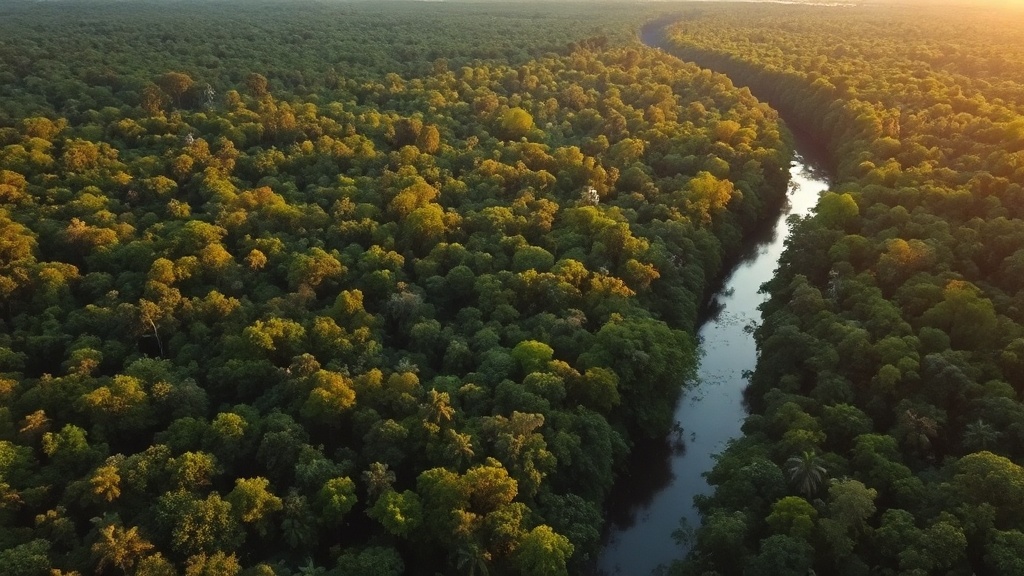
The Amazon is one of the most ecologically sensitive destinations on Earth — and how you get there, where you sleep, and what you do on the ground makes a measurable difference to the forest’s future.
This guide is built for 2026 travelers who want more than a checkbox experience. We’ll cover the smartest gateway airports, the certification labels actually worth trusting, realistic carbon math, and a few honest tradeoffs that most “eco” travel content glosses over.
Choosing Your Gateway: The Airport Decision Matters More Than You Think
Most long-haul travelers heading to the Amazon land in one of three hubs before connecting inland:
- Manaus (IATA: MAO), Brazil — the most common gateway for the central and western Brazilian Amazon. Operated as Eduardo Gomes International Airport, it handles flights from São Paulo (GRU), Bogotá (BOG), and, on select schedules, Miami (MIA).
- Belém (IATA: BEL), Brazil — the gateway to the eastern Amazon, Para state, and the mouth of the river. Flights connect through São Paulo and Rio de Janeiro (GIG).
- Iquitos (IATA: IQT), Peru — the only access point to the Peruvian Amazon that can’t be reached by road. All arrivals fly in, full stop.
Routing from North America and Europe in 2026
From the US East Coast, expect to pay roughly $600–$950 round-trip to Manaus with one stop, typically through São Paulo or Bogotá. Direct options don’t exist from North American cities to MAO as of early 2026. From Europe, London (LHR) and Lisbon (LIS) offer the most competitive connections to Belém, often under $900 round-trip booked 8–12 weeks out.
Honest tradeoff: Iquitos tends to attract travelers seeking the least-disturbed Peruvian rainforest, but the domestic Peru connection (usually Lima, LIM → IQT) adds a leg — and roughly 1.5 hours of additional flight time — which compounds your per-trip emissions. Weigh the ecological authenticity of the destination against the carbon cost of getting there.
Understanding Your Carbon Footprint Before You Book
Flying to the Amazon carries a real emissions burden. A round-trip economy flight from New York (JFK) to Manaus (MAO) produces approximately 1.0–1.4 tonnes of CO₂ per passenger, depending on the aircraft, routing, and whether you factor in radiative forcing (the high-altitude warming effect that most basic calculators ignore).
Here’s a quick comparison of carbon tools worth using in 2026:
- ICAO Carbon Emissions Calculator — free, IATA-endorsed, conservative estimates
- Atmosfair — German nonprofit, factors in radiative forcing, ranks airlines by efficiency
- Gold Standard Offset Registry — if you’re buying offsets, look specifically for projects in the Amazon basin (Acre state REDD+ projects, for example) to keep the money geographically relevant
Is Offsetting Enough?
Honestly? Not on its own. Carbon offsetting has improved since the scandals of the early 2020s — voluntary carbon markets tightened their verification standards after the 2023–2024 credibility crisis — but offsets should be your last resort after:
- Flying economy (business class roughly doubles per-seat emissions)
- Choosing a non-stop or single-stop routing over multi-leg itineraries
- Picking airlines with newer, more fuel-efficient fleets (the Airbus A321neo and Boeing 787 Dreamliner are meaningfully cleaner than older narrowbody and widebody types)
A Gold Standard or Verra VCS-verified offset project runs roughly $15–$25 per tonne of CO₂ in 2026. For a JFK–MAO round trip, that’s a $20–$35 add-on — not nothing, but not prohibitive either.
Picking Accommodation: What “Eco-Lodge” Actually Means
The term “eco-lodge” has no legal definition in Brazil or Peru. Anyone can print it on a website. What you need to look for are third-party certifications, and there are a few that genuinely hold lodges accountable.
Certifications Worth Trusting
- Rainforest Alliance Verified — supply chain auditing, labor standards, and biodiversity criteria. Look for the green frog seal.
- ABETA (Brazilian Association of Ecotourism and Adventure Travel) — Brazil-specific, checks for community benefit and minimum impact standards.
- PROMPERU’s Certificación for Sustainable Tourism (CST adapted for Peru) — the Peruvian government’s framework, applied to Iquitos-area lodges through regional agencies.
What to Ask Before You Book
Don’t just rely on the badge. I asked a lodge near Manaus in late 2025 whether their electricity came from solar or diesel generators — the answer (diesel, with no plan to change) shifted my decision. Ask:
- What percentage of staff are from local Indigenous or riverside (ribeirinho) communities?
- Does the lodge operate within a private reserve or buffer zone? How large is it?
- How is wastewater managed?
- What’s the maximum guest capacity, and do they limit nightly occupancy to reduce impact?
A well-run eco-lodge in the Mamirauá Sustainable Development Reserve area, for example, caps groups at 8–12 guests and employs local guides trained under Brazil’s Ministry of Tourism certification framework — that’s a meaningful benchmark.
Honest tradeoff: Genuinely certified lodges typically cost 20–40% more than uncertified alternatives marketed with the same “eco” language. A mid-range certified lodge near Manaus runs roughly $120–$220 per night including meals and guided activities. Budget travelers will feel the pinch, but the price difference largely reflects fair wages for local staff — which is the whole point.
Getting Around the Amazon Responsibly
Once you’re on the ground (or water), transportation choices stack up quickly.
River Over Road, Almost Always
The Amazon basin’s road network is both limited and ecologically destructive — new roads are one of the primary drivers of deforestation. Wherever possible, travel by boat:
- Slow boats (lanchas) on the Rio Negro or Rio Solimões are fuel-inefficient but carbon-competitive when shared across 40–80 passengers
- Private speedboats are convenient but burn significantly more fuel per person — reserve them for situations where the group is large enough to offset the difference
- Canoes with local guides for secondary waterways are the lowest-impact option and frankly the most rewarding
Wildlife Interaction: Where the Line Is
The responsible-tourism community has largely reached consensus on this by 2026: no direct animal contact. That means:
- No “swim with pink dolphins” programs that involve feeding or herding
- No handling of sloths, anacondas, or caimans for photos
- No visiting any facility that keeps wild animals for tourist display without a IBAMA (Brazil’s environmental authority) accreditation for rescue and rehabilitation
Legitimate wildlife observation — night canoeing for caimans, canopy walks, guided birding at dawn — is incredible and does not require any of the above.
The Best Time to Go (and Why It Affects Your Impact)
Timing your trip right reduces both your personal discomfort and your pressure on the ecosystem.
- High water season (April–June): The flooded forest (igapó and várzea) is navigable by canoe, dolphins are more visible, and trails are mostly underwater. Lodges are quieter. This is my preferred window.
- Low water season (August–November): Beaches appear, river fishing is better, and wildlife concentrates around remaining water sources — which can be great for sightings but also means more ecological stress on wildlife.
- Peak tourist season (July): School holiday month across Europe and Brazil. Lodges charge peak rates (expect a 15–25% surcharge over shoulder months) and trails get noticeably busier.
Flying in May or early June typically hits the intersection of lower airfares (shoulder season pricing), lighter lodge occupancy, and the most dramatic flooded-forest scenery. We found round-trip fares from Miami (MIA) to Manaus (MAO) in May 2025 running about $680–$740 — solid value for the experience.
Supporting Local Communities: Where Your Money Actually Goes
Responsible tourism in the Amazon is inseparable from Indigenous and riverside community economics. Roughly 40% of the Brazilian Amazon falls within recognized Indigenous territories, and tourism dollars that flow to those communities create a direct financial incentive for forest preservation over extraction.
Practical ways to direct spending:
- Buy handicrafts directly from community cooperatives, not hotel gift shops (the markup at the hotel rarely reaches the artisan)
- Book guided tours through community-based tourism initiatives — FUNAI (Brazil’s Indigenous affairs agency) maintains a list of officially sanctioned programs; the Amazonas state tourism board (Amazonastur) publishes an updated directory annually
- Tip in local currency (Brazilian Real or Peruvian Sol) — guides and boat operators overwhelmingly prefer this over credit-card-processed gratuities that get clipped by platform fees
One concrete benchmark: a full-day guided trip with a certified local guide should cost BRL 200–400 (roughly $35–$70 USD) for a small group. If someone’s quoting you significantly less, ask who’s actually being paid.
Packing for Low Impact: The Short List
You don’t need a gear overhaul. A few swaps matter a lot in a rainforest context:
- Reef-safe, biodegradable sunscreen and insect repellent — conventional DEET formulas are toxic to amphibians and fish; look for picaridin-based repellents or permethrin-treated clothing as alternatives
- Reusable water bottle with a filter (Sawyer Squeeze or similar) — lodge water is often safe, but river-adjacent small operators may not have reliable purification
- Light, quick-dry synthetic or merino clothing over single-use rain ponchos — a quality rain jacket lasts 50+ trips and keeps plastic waste out of jungle communities that have no recycling infrastructure
- Offline maps downloaded — reduces the temptation to buy a local SIM card packaged in unnecessary single-use plastic, and works where connectivity is nonexistent anyway
A Note on the Flights Themselves: Choosing Airlines With Better Records
Not all carriers serving South America are equal on sustainability. As of 2026, a few airlines have published credible decarbonization roadmaps tied to SAF (Sustainable Aviation Fuel) procurement and fleet renewal:
- LATAM Airlines has publicly committed to a 30% carbon intensity reduction by 2030 relative to 2019 levels and operates an A321neo fleet on key domestic Brazilian routes
- Azul Brazilian Airlines operates several Amazon-connecting routes and has been expanding its turboprop fleet (lower emissions per seat on short hops) in the Amazon interior
- TAP Air Portugal (Lisbon hub) markets SAF-blended transatlantic flights on select routes, though SAF percentages remain in the low single digits industry-wide
None of these carriers are carbon-neutral — don’t let marketing language suggest otherwise. But fleet age and SAF purchasing are measurable inputs, and Atmosfair’s airline ranking publishes updated efficiency scores you can check before booking.
Your Concrete Next Step
Before you search for flights, spend 15 minutes on two things: run your planned routing through the Atmosfair carbon calculator to get a radiative-forcing-adjusted emissions number, then cross-reference your shortlisted lodges against the Rainforest Alliance’s online verification database (a free public tool at rainforest-alliance.org). Those two checks will filter out more greenwashing than any amount of marketing copy — and they’ll take less time than picking a seat map.
Then book your flights for May or early June 2026, target a Rainforest Alliance-verified lodge near Manaus or in the Mamirauá Reserve, and put the $25 you save on shoulder-season pricing toward a verified Amazon carbon offset. That’s a trip worth taking.