Now Reading: Plan the Perfect Family Road Trip Across the USA in 2026
- 01
Plan the Perfect Family Road Trip Across the USA in 2026

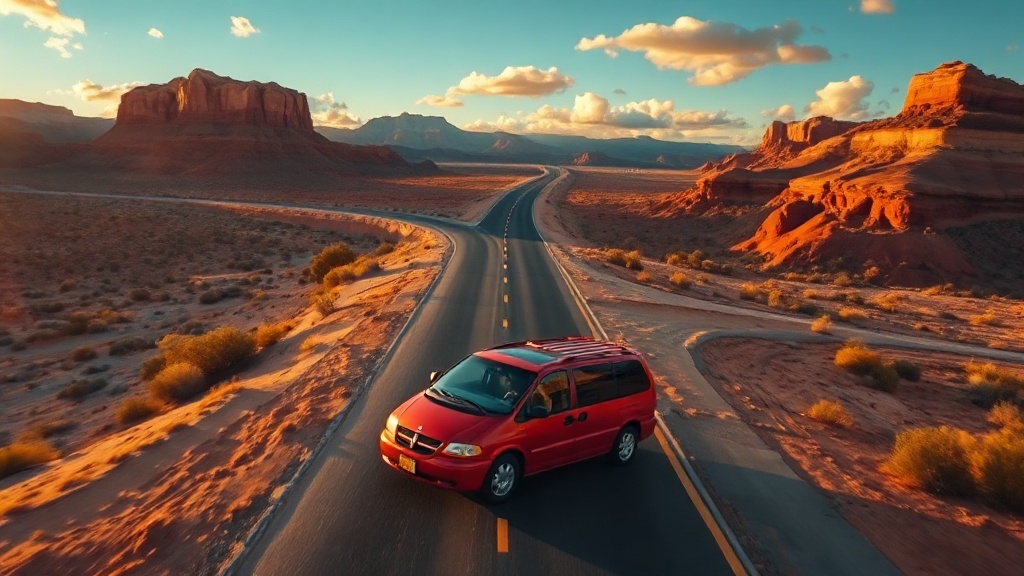
Flying into one city and driving out of another is the smartest move most families never think to make — and in 2026, open-jaw airfare has never been easier to find for under $300 per person on major routes.
This guide walks you through choosing the right route, locking in the best one-way car rental deals, managing airfare for a group, and keeping the whole trip from ballooning past your budget. No vague inspiration here — just the logistics that actually work.
Step 1: Pick Your Route Before You Book a Single Flight
Your route dictates everything: which airports you fly into and out of, how many nights you need, and what kind of vehicle makes sense. Nail this first.
The Three Routes Worth Your Time in 2026
Route 1: New York (JFK) → Los Angeles (LAX) — The Classic Coast-to-Coast
- Distance: roughly 2,800 miles by road
- Realistic drive time: 10–14 days if you want to stop and actually enjoy it
- Highlights: Pennsylvania, Nashville or Memphis, Oklahoma City, Amarillo (Route 66), Albuquerque, Flagstaff, and the Mojave Desert before landing in LA
- Best for: families who’ve never done a big American road trip
Route 2: Chicago (ORD) → Miami (MIA) — The South Diagonal
- Distance: roughly 1,375 miles
- Realistic drive time: 7–10 days
- Highlights: Indianapolis, Louisville, Nashville, Chattanooga, Atlanta, and the Florida Panhandle before Miami’s beaches
- Best for: families with younger kids who can’t handle marathon driving days
Route 3: Seattle (SEA) → Denver (DEN) — The Northwest Wilderness Run
- Distance: roughly 1,300 miles
- Realistic drive time: 7–9 days
- Highlights: Mount Rainier, the Columbia River Gorge, Boise, Twin Falls, and the Rockies
- Best for: families who want national parks to anchor each leg
The honest tradeoff here: Coast-to-coast sounds epic and it is — but it’s genuinely exhausting with kids under 8. The Chicago-to-Miami or Seattle-to-Denver routes offer more flexibility, shorter daily drives (aim for under 250 miles per day with little ones), and easier bail-out options if someone gets sick.
Step 2: Book an Open-Jaw Flight — Not a Round-Trip
Most families default to flying round-trip to one city, renting a car, and driving a loop back. That works, but you’re paying for redundant miles and driving the last stretch tired and eager to get home.
An open-jaw itinerary means you fly into one city and out of another. Airlines price these competitively because they’re filling seats on two separate legs.
How to Find Open-Jaw Deals in 2026
- Google Flights handles open-jaw searches natively. Enter your origin in the “From” field and use the multi-city option to set different departure and arrival cities.
- Kayak and Momondo also support open-jaw; run both to cross-check.
- For a family of four flying JFK → Nashville (inbound) and Los Angeles → JFK (outbound), budget $1,200–$2,000 total in economy, depending on how far in advance you book.
- The sweet spot for booking domestic open-jaw in 2026: aim for January through March for summer travel, or August for fall trips.
Airline-Specific Tips
- Southwest still doesn’t charge baggage fees on the first two checked bags per passenger — a meaningful saving for a family hauling gear.
- Delta and United offer more flight options on the JFK–LAX corridor, but budget for one checked bag per person at roughly $35–$40 each way.
- If your family has a Chase Sapphire Reserve or Amex Platinum, transfer points to airline partners before purchasing — you can often knock 30–50% off the cash price on domestic routes.
Step 3: Lock In the One-Way Car Rental Early
One-way car rentals carry a “drop fee” that can range from $0 to $500+ depending on the route and the rental company. The JFK-to-LAX run is a popular corridor, so drop fees are often waived or capped around $100–$150 with the major chains. Lesser-traveled routes (like SEA to DEN) sometimes carry higher fees — budget up to $200.
What Vehicle Size Actually Makes Sense
| Family size | Recommended vehicle | Why | |—|—|—| | 2 adults + 1–2 kids | Standard SUV (Ford Explorer class) | Enough trunk space without the fuel hit | | 2 adults + 3–4 kids | Minivan or full-size SUV | Sliding doors are a genuine sanity-saver | | Multi-family (6–8 people) | 12-passenger van or two separate vehicles | One van is cheaper than two SUVs if you can share driving |
Booking Tactics That Actually Save Money
- Book through Costco Travel if you’re a member — their one-way rates consistently beat the rental company’s own website by 10–20%.
- Add a car seat at the rental desk only if you need one. At roughly $13–$15/day, a week-long rental adds $90–$105. Bringing your own is almost always cheaper.
- Decline the rental company’s collision damage waiver if your credit card covers it. Most Visa Infinite and Amex cards do for domestic rentals — read your card’s benefits guide before you go.
The honest tradeoff here: Booking far in advance gets you a better price, but rental car inventory can be unpredictable. If your dates shift, free cancellation is non-negotiable — confirm it before you pay.
Step 4: Budget the Whole Trip Realistically
Let’s talk numbers, because “budget road trip” means very different things to different families.
A Rough Daily Budget for a Family of Four (2026 estimates)
- Accommodation: $120–$180/night at a mid-range chain hotel with free breakfast (Hampton Inn, Courtyard, Holiday Inn Express). Camping at state parks runs $20–$45/night if your kids are up for it.
- Fuel: A mid-size SUV averaging 25 mpg over 2,800 miles uses roughly 112 gallons. At around $3.50–$4.00/gallon nationally, that’s $390–$450 total in fuel.
- Food: $80–$120/day for a family of four, mixing grocery runs with one sit-down meal.
- Attractions/entry fees: National Park passes ($80 for an annual “America the Beautiful” pass) cover entrance to every national park on your route — it pays for itself after two parks.
- Incidentals (tolls, parking, laundry): Budget $200–$300 for the whole trip.
Total ballpark for a 10-day, coast-to-coast trip for four: $3,500–$5,500 all-in, excluding airfare. Add $1,200–$2,000 for flights and you’re looking at $4,700–$7,500 for the full experience. Not cheap, but per person it’s often cheaper than a packaged international family vacation.
Step 5: Build the Driving Schedule Around Kids, Not Miles
The biggest mistake families make is treating a road trip like a relay race. Hitting 400-mile days every day turns the car into a pressure cooker by Day 3.
A Smarter Daily Driving Framework
- Cap daily driving at 3.5–4 hours of actual wheel time, not miles.
- Schedule a mid-morning stop (a park, a rest area with open space, anything with room to run).
- Build in one full rest day for every three days of driving — not a “light driving day,” a full stop at one location.
- Plan hotel check-ins no later than 5:00 PM. Arriving after dark with tired kids in an unfamiliar city is miserable.
Best Stops by Route (With Real Payoff)
JFK → LAX via Route 66:
- Nashville, TN: 2 nights — the Country Music Hall of Fame ($30/adult, $18 ages 6–12) and the free Bicentennial Capitol Mall State Park
- Amarillo, TX → Albuquerque, NM: Cadillac Ranch (free), Blue Hole in Santa Rosa ($5/person to swim)
- Grand Canyon South Rim, AZ: 1–2 nights, covered by your America the Beautiful pass
ORD → MIA:
- Louisville, KY: Louisville Slugger Museum ($16/adult, $11 ages 3–12)
- Chattanooga, TN: Tennessee Aquarium ($36/adult, $24 ages 3–12)
- Destin, FL Panhandle beaches: 2 nights — the white sand here genuinely rivals the Caribbean
SEA → DEN:
- Columbia River Gorge, OR: Multnomah Falls ($2 timed entry), free roadside viewpoints
- Craters of the Moon, ID: Covered by America the Beautiful pass — kids go wild for the lava fields
- Rocky Mountain National Park, CO: Covered by the pass, and Trail Ridge Road opens by late May
Step 6: Manage the Flying Home Leg Without the Chaos
The return flight is where road trip fatigue bites hardest. Everyone’s tired, the car smells like french fries, and you’re trying to return a vehicle by noon.
A Few Rules That Help
- Book your departure flight no earlier than 2:00 PM on your final day. Returning a one-way rental, shuttling to the terminal, and clearing security with a family takes longer than you think — especially at busy airports like LAX or MIA.
- Use the rental car company’s app to do a pre-return inspection. Document any pre-existing dings with timestamped photos before you leave the lot on Day 1, and again at drop-off.
- Pack a “flight day” bag that stays accessible throughout the drive — chargers, snacks, a change of clothes for each kid, and all passports/IDs. Don’t pack it into the checked bags.
- If your flight home is significantly delayed, TSA PreCheck or Clear ($189/year for adults, free for kids under 18 with an enrolled parent) takes enough stress off airport security to be worth it for frequent travelers.
The Real Gear That Makes a Difference
Skip the listicles selling you 47 “road trip essentials.” Here’s what actually earns its trunk space:
- A portable car fridge (12V, brands like BougeRV or Iceco run $150–$250) saves $30–$40/day on convenience store drinks and snacks
- Reusable water bottles — one per person, refilled at every stop
- A roof cargo bag (soft-sided, $80–$150) if you’re in an SUV and want trunk space for easy access
- Downloaded offline maps on Google Maps or Maps.me — cell coverage on Route 66 through Oklahoma and New Mexico is spotty
Your Concrete Next Step
Open Google Flights right now and run a multi-city search for your chosen route. Compare open-jaw pricing versus round-trip; in most cases, open-jaw costs within $50–$100 of round-trip and saves you days of redundant driving. If you’re targeting summer 2026, the booking window for the best domestic fares opens in January 2026 — set a price alert today so you don’t miss the dip.