

Now Reading: Best Airports in Europe for Layovers and Transit Connections
- 01
Best Airports in Europe for Layovers and Transit Connections

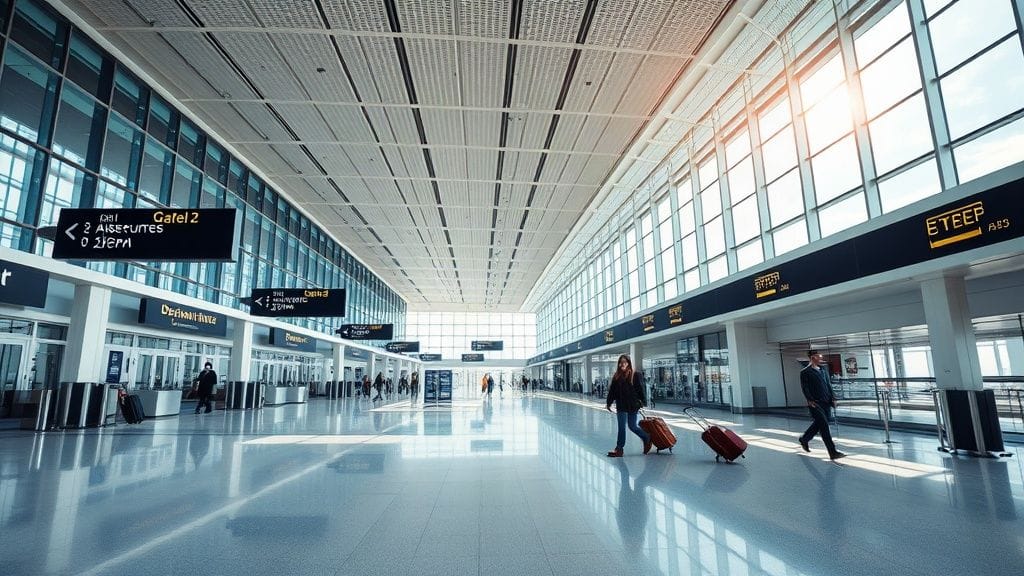
Why Your Choice of European Hub Matters More Than You Think — Best Airports In Europe For Layovers
When you book a connecting flight, the airline or booking engine usually picks the hub for you. But the best airports in Europe for layovers are not interchangeable. A three-hour connection at one airport can feel relaxed and efficient; the same window at another can leave you sprinting between terminals, queuing at passport control, or sitting on a hard bench with nothing open.
Understanding which hubs work best — and why — gives you real leverage when you are comparing itineraries or deciding whether to book a connecting route at all. If you have not thought about this before, our guide to connecting flights vs. direct routes is a useful starting point for framing the trade-off. Compare current fares and route options using a reliable flight search engine before booking.
What Makes a European Airport Good for Layovers? — Best Airports In Europe For Layovers
Before naming specific airports, it helps to know what actually separates a good transit hub from a frustrating one.
Connection time and terminal layout
A compact, single-terminal airport with airside connections is far more forgiving than a multi-terminal complex where you need a bus, train, or even an outdoor walk between gates. Minimum connect times (MCTs) — the shortest gap an airline considers safe for a connection — vary enormously by airport and route combination.
For reference, some airports publish MCTs in the range of 45 minutes for domestic-to-domestic connections, while international-to-international connections at the same airport can require 90 minutes or more. Always check the specific MCT for your route rather than assuming a generic figure. Our deeper look at what airport layover times actually mean for your booking and baggage walks through how these numbers affect you practically.
Passport control and Schengen zones
Europe’s Schengen Area changes the calculus significantly. If both your inbound and outbound flights are within Schengen, you transit airside without immigration checks. If you are crossing into or out of Schengen, you face a full passport control queue. This single factor can add 30 to 60 minutes to a connection at busy times.
Facilities for longer waits
A four-hour layover is very different from a twelve-hour one. Good airports for longer stays offer comfortable seating, a range of food options at reasonable prices, showers, lounge access for eligible travellers, and — ideally — easy city access if you want to leave and explore.
The Best European Airports for Layovers, Assessed Honestly — Best Airports In Europe For Layovers
Amsterdam Schiphol (AMS)
Schiphol is consistently praised for layover convenience, and the main reason is simple: it is almost entirely under one roof. Nearly all connections happen within a single terminal complex, which means short walks and no inter-terminal transport for most passengers. The airport has a well-developed airside shopping and dining area, a small museum branch of the Rijksmuseum, and reliable signage in English.
For Schengen-to-non-Schengen connections, budget at least 90 minutes. For fully intra-Schengen hops, 60 minutes is workable if your arriving flight is on time. The train link to Amsterdam Centraal takes around 15 minutes, making a city visit feasible on a layover of four hours or more.

Munich (MUC)
Munich Airport is compact relative to its traffic volume and consistently ranks among the easiest large hubs for connections in Germany. The two main terminals are connected airside, which removes the need to clear security again when staying within Schengen. The airport’s dining quality is notably above average for a hub, and the beer garden between terminals is a genuine novelty.
The city centre is about 40 minutes away by S-Bahn, which is manageable on a longer layover but tight on anything under four hours once you factor in the journey back and security re-entry.
Zurich (ZRH)
Zurich is a smaller hub than Amsterdam or Frankfurt, but that is part of its appeal. Connections are fast, the airport is clean and organised, and the train station sits directly beneath the terminal. Swiss International Air Lines operates a tight bank structure here, meaning connection windows are carefully managed — but that also means the airport is built around efficient transfers.
The main caveat is price: food and retail inside Zurich Airport are expensive even by European airport standards. Bring your own snacks for anything beyond a quick coffee.
Helsinki Vantaa (HEL)
Helsinki punches above its weight as a transit point, particularly for travellers routing between Europe and Asia. Finnair uses it as a hub for East Asia routes, and the airport’s compact layout means connections between European feeders and long-haul departures are genuinely fast. The walk between most gates is short enough that a 60-minute Schengen-to-Schengen connection rarely causes problems.
The airport is less well known than Amsterdam or Frankfurt, which keeps it less congested at peak times — a real practical advantage.
Frankfurt (FRA): Efficient but Complex
Frankfurt is Europe’s third-busiest airport and Lufthansa’s main hub. The scale means an enormous range of connections, and the airline’s hub banking is designed for tight transfers. However, the airport has two separate terminals — Terminal 1 and Terminal 2 — connected by an airside SkyLine train. Inter-terminal connections are possible but add time.
If both your flights operate from the same terminal (very common on Lufthansa-codeshare itineraries), Frankfurt is efficient. If not, allow extra time. The airport also has a long-stay hotel, showers, and solid lounge options for business travellers or those with premium tickets.

Airports Worth Approaching with Caution
London Heathrow (LHR) is one of the world’s major hubs, but its five terminals and inter-terminal transfer times make tight connections genuinely risky. Paris Charles de Gaulle (CDG) has a reputation for longer walks, bus transfers between some gates, and passport control queues that can surprise first-time transiting passengers. Both airports can work well on generous connection times, but they are unforgiving if your inbound flight is delayed.
Practical Tips for Planning a Smooth European Transit
- Book through one carrier or alliance where possible. A single booking protects you if a delay causes a missed connection; separate tickets do not.
- Check the Schengen status of both legs before assuming you will transit airside.
- Give yourself more time than the minimum connect time suggests. MCTs are calculated for ideal conditions. Real conditions often are not ideal.
- Look up your specific terminal before you fly. At Frankfurt and Heathrow especially, the terminal assignment changes what your connection actually looks like.
- For long layovers, research city access in advance. Some airports are 15 minutes from the centre; others are 60 minutes and expensive by taxi.
If you are actively searching for itineraries where a connecting route saves money, our article on finding cheaper flights by booking on connecting routes explains how to spot these opportunities without taking unnecessary risks.













Pingback: One-Way Ticket vs. Round-Trip Flight: How to Choose