Now Reading: 10 Destinations That Make Learning a New Language So Easy
-
01
10 Destinations That Make Learning a New Language So Easy

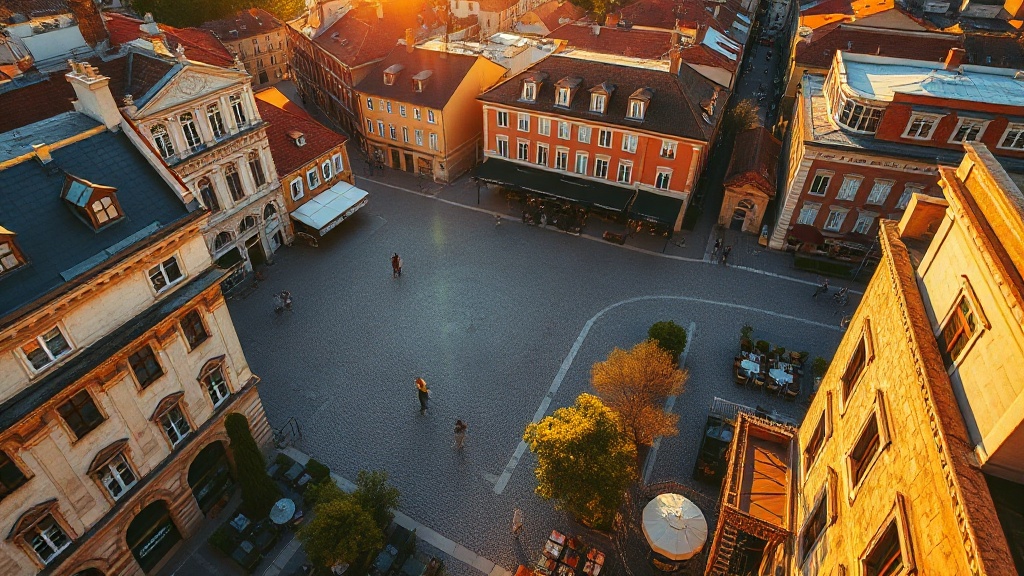
There’s a difference between studying a language for three years and speaking it after three weeks abroad — the right destination does more for your fluency than any app ever will.
If you’re planning a trip in 2026 specifically to level up a language, these ten cities are where learners consistently make the most progress. I’ve ranked them by how immersive the environment actually is, not just how pretty the postcards look.
—
1. Medellín, Colombia — Spanish (Latin American)
Medellín has become the go-to city for Spanish learners on a budget, and there are concrete reasons why. Colombians — especially paisas from the Antioquia region — speak a notoriously clear, measured Spanish that’s far easier to follow than, say, rapid-fire Buenos Aires or thick Caribbean accents. Language schools like the well-reviewed Centro Catalina offer group classes from around $8–$12 per hour.
Flights: Round-trip fares from Miami (MIA) to Medellín’s José María Córdova International Airport (MDE) hover around $280–$400 in 2026, often on carriers like Spirit or Copa with one stop. New York (JFK) to MDE tends to run $350–$500 round-trip.
Honest tradeoff: English is increasingly common in the El Poblado neighbourhood, so if you stay there exclusively, you’ll actually hear less Spanish. Push yourself to Laureles or Envigado instead.
—
2. Salamanca, Spain — Castilian Spanish
Spain’s Ministry of Education officially recognises Salamanca as the city with the purest Castilian pronunciation in the country — it’s not just marketing. The Universidad de Salamanca, founded in 1218, draws thousands of international students every year, and its language programmes run year-round.
Flights: London Heathrow (LHR) to Madrid Barajas (MAD) costs as little as $50–$80 one-way with budget carriers. Salamanca is then a 2.5-hour bus ride from Madrid. From the US East Coast, expect $400–$650 round-trip to Madrid.
Best window: September through November sees fewer summer tourists, cooler temperatures, and a fully active student population — ideal conditions for real conversational practice.
—
3. Chengdu, China — Mandarin
Forget Beijing for your first Mandarin trip. Chengdu residents speak a slightly softer version of standard Mandarin compared to the thick erhua (retroflex) accent of the capital, making it more accessible for beginners. The city has a well-developed expat infrastructure but enough local-only neighbourhoods that you’ll be forced to use Chinese daily.
Flights: Round-trips from Los Angeles (LAX) to Chengdu Tianfu International Airport (TFU) typically run $650–$900 in 2026, with layovers in cities like Tokyo or Seoul on carriers such as ANA or Korean Air. Non-stop options from SFO have opened on some seasonal schedules.
Honest tradeoff: China’s internet restrictions mean many translation and learning apps (Google Translate included) won’t work without a VPN — sort that out before you board.
—
4. Lisbon, Portugal — European Portuguese
European Portuguese sounds nothing like Brazilian Portuguese. If your goal is to understand both variants, start in Lisbon — the accent here is considered the “standard” and is what you’ll hear in news broadcasts and formal settings across the Lusophone world.
Flights: From New York (JFK) or Boston (BOS), TAP Air Portugal flies direct to Lisbon (LIS) with round-trip fares often in the $450–$700 range. Book January through March for the lowest fares.
Learning perk: Lisbon’s language schools are plentiful and well-priced. A 20-hour intensive week at a reputable school typically costs €200–€300 (~$215–$325), considerably less than equivalents in Paris or Rome.
—
5. Tokyo, Japan — Japanese
Japanese is notoriously difficult to reach conversational level in (the US Foreign Service Institute classifies it as a Category IV language, requiring roughly 2,200 hours of study). That said, Tokyo rewards serious learners better than anywhere else. The city’s infrastructure is so well-labelled that you can spend your first days doing nothing but reading kanji on subway signs.
Flights: Round-trips from the US West Coast to Tokyo Narita (NRT) or Haneda (HND) run $650–$1,100 depending on season and airline. Spring (March–April) and autumn (October) are peak demand periods — prices spike $150–$300 above off-season.
Honest tradeoff: Tokyoites are famously polite and will switch to English the moment they sense you’re struggling. You have to actively resist that safety net. Seek out izakayas and local shotengai shopping streets over tourist-facing venues.
—
6. Montpellier, France — French
Paris is the obvious choice for French learners, but Montpellier is more practical. The southern university city has one of the highest student-to-resident ratios in France — about 1 in 3 residents is a student — which means cafés, markets, and bars are full of French speakers who actually want to talk. And it’s significantly cheaper than the capital.
Flights: London Gatwick (LGW) to Montpellier (MPL) runs under $60 one-way on easyJet during off-peak weeks. From the US, flying into Barcelona (BCZ) or Marseille (MRS) then taking a train is often cheaper than flying direct.
Best timing: May through June and September through October offer the most comfortable weather and the fewest summer tourists, which means less English-language menu-waving and more actual conversation.
—
7. Berlin, Germany — German
Germany’s capital is not the easiest city to learn German in — half of young Berliners will answer your German in flawless English. But Berlin’s language school scene is arguably the best in Europe. The Volkshochschule (community adult education centres) offer accredited German courses starting at just €3–€5 per lesson for city residents, and slightly more for short-term visitors.
Flights: From the US, round-trips to Berlin Brandenburg Airport (BER) typically cost $450–$750 out of New York (JFK), Chicago (ORD), or Washington (IAD). Several carriers fly direct, including United and Lufthansa.
Honest tradeoff: If fluency is your goal, Berlin may frustrate you precisely because of how English-friendly it is. Consider pairing two weeks in Berlin with a week in a smaller city like Leipzig or Freiburg, where English is far less dominant.
—
8. Oaxaca, Mexico — Spanish (Mexican)
Oaxaca City is small — population under 300,000 — which means daily life forces interaction in ways that Mexico City’s sprawl doesn’t. You’ll bargain at the Benito Juárez market, navigate taxis, and chat with mezcal producers entirely in Spanish. Several well-regarded schools here offer homestay packages that include 20 hours of instruction plus accommodation for around $350–$500 per week.
Flights: Round-trips from Los Angeles (LAX) to Oaxaca (OAX) often involve a connection through Mexico City and cost $250–$450 total. Non-stop seasonal flights from LAX have appeared on Volaris and occasionally Aeromexico.
Best window: November through February is dry season, cooler temperatures, and post-holiday deals on airfare — often $50–$80 cheaper than peak summer slots.
—
9. Seoul, South Korea — Korean
Korean Wave (Hallyu) enthusiasm has created a boom in Korean language learners globally, and Seoul is fully set up for it. Yonsei University’s Korean Language Institute offers 10-week intensive programmes with morning classes Monday through Friday — tuition runs roughly $1,200–$1,500 per term in 2026. The city’s subway system is one of the most user-friendly in Asia, with English and Korean side by side on every sign — perfect for practising Hangul reading in real time.
Flights: From LAX or SFO to Incheon International Airport (ICN), round-trips run $700–$1,000 with Korean Air or Asiana. Shoulder season (April–May and September–October) tends to be $100–$200 cheaper than summer peaks.
Honest tradeoff: Seoul is expensive by Southeast Asian standards. Budget $60–$90 per day for accommodation, food, and transport if you’re being careful — more if you discover the city’s exceptional restaurant scene.
—
10. Buenos Aires, Argentina — Spanish (Rioplatense)
Buenos Aires is where you go if you want to learn a truly distinctive dialect — the Rioplatense variant, with its Italian-influenced intonation and vos pronoun replacing tú. If you’ve already got intermediate Spanish, spending 4–6 weeks here will do more for your range and confidence than a year of classroom study. The Argentine peso’s ongoing volatility in 2026 continues to make it one of the most affordable major cities in the Americas for foreign visitors paying in USD or EUR.
Flights: From Miami (MIA), round-trips to Ezeiza International Airport (EZE) typically run $550–$850 on LATAM or American with one connection. From New York (JFK), expect $600–$950.
Best timing: March through May (Buenos Aires autumn) is ideal — school year is in full swing, locals are not on holiday, and airfare is consistently 15–20% cheaper than the January–February summer peak.
—
How to Pick the Right Destination for You
Not every language-learning trip looks the same. Here’s a quick framework:
- Budget under $1,500 total for two weeks: Oaxaca, Medellín, or Buenos Aires are your strongest options for cost-effectiveness.
- Already intermediate level: Buenos Aires and Chengdu will stretch you faster than beginner-friendly cities.
- Short trip (7–10 days): Montpellier, Berlin, or Lisbon — all within easy reach of other European cities if you want to extend.
- Structured programme with certification: Seoul (Yonsei) and Salamanca (Universidad de Salamanca) offer the most academically rigorous short-term options.
- Immersion with minimal English escape hatch: Oaxaca, Chengdu, and Medellín (outside El Poblado) will give you the fewest English bailouts.
What Actually Makes Immersion Work
Language immersion doesn’t happen automatically just because you’re in the country. A few things that actually move the needle:
- Homestays over Airbnb. A host family means 2–3 hours of compulsory daily conversation with no opt-out.
- Phone in target language. Change your device language on arrival — it’s uncomfortable and that’s the point.
- One social event per day without English speakers. A cooking class, a local gym, a neighbourhood peña (music gathering) — whatever gets you talking to people who don’t share your native tongue.
- Tutors on italki. Budget $10–$20/hour for a community tutor in-destination — supplement school classes with a local conversation partner who’ll correct your accent in real time.
—
Ready to Book?
Pull up Google Flights right now and set a price alert for your target city using the exact airport codes listed above — MDE, LIS, TFU, ICN, or OAX depending on your language goal. Set the alert for your preferred 2026 travel window and check back when prices drop. Pair that with a direct inquiry to one language school in your chosen city (most have English intake forms) to lock in a class week before your flights disappear.
The language you’ve been meaning to learn isn’t going to wait forever — and neither will those airfare deals.
Stay Informed With the Latest & Most Important News
Previous Post
Next Post














Advertisement