

Now Reading: Thailand 2026: 10 Destinations Worth Flying To This Year
-
01
Thailand 2026: 10 Destinations Worth Flying To This Year

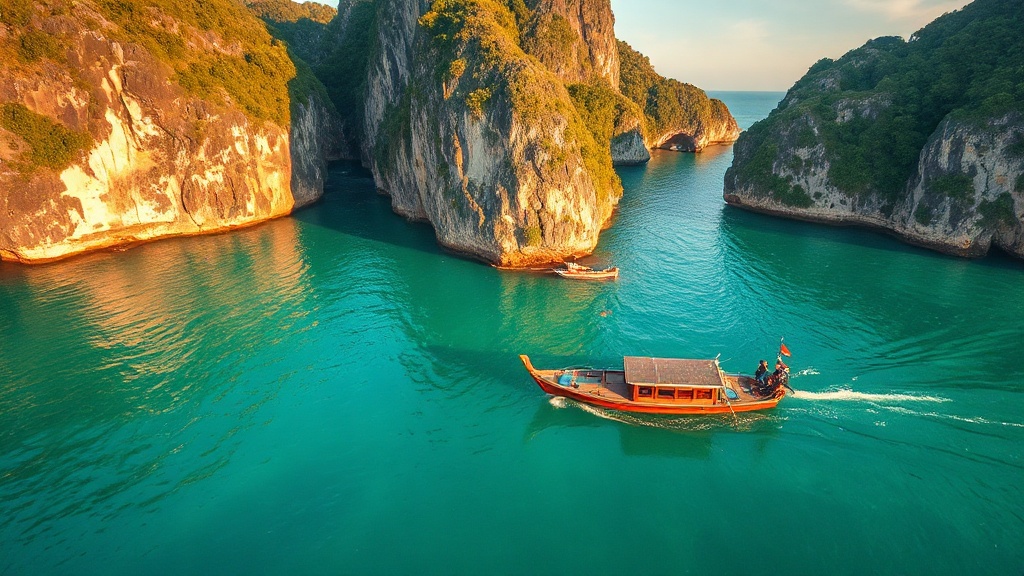
Thailand keeps earning its place on long-haul bucket lists — and in 2026, round-trip fares from the US West Coast to Bangkok’s Suvarnabhumi Airport (BKK) are regularly dipping below $700 on carriers like Thai Airways and Korean Air when booked three to five months out. That’s a good enough reason to start planning now.
Here are 10 destinations across Thailand worth routing your itinerary around, with honest notes on how to get there, what it costs, and where it isn’t quite worth the hype.
—
1. Bangkok — Your Almost-Unavoidable Starting Point
Nearly every international flight into Thailand lands at Suvarnabhumi (BKK) or Don Mueang (DMK), which makes Bangkok both a gateway and a destination in its own right. The city rewards a two- to three-night stay before you head anywhere else.
What to actually do: Skip the Grand Palace on weekends — crowds are brutal. Go on a Tuesday or Wednesday morning instead. The rooftop bar scene around Silom and Sathorn is genuinely excellent; expect to pay around $8–12 USD per cocktail, which is steep by Thai standards but reasonable by global-city ones.
Honest tradeoff: Bangkok’s traffic is legendary in the worst way. The BTS Skytrain covers a lot of ground, but if your hotel isn’t near a station, budget an extra 45–60 minutes for every cab ride during peak hours (7–9 a.m. and 5–8 p.m.).
—
2. Chiang Mai — The North’s Cultural Capital
Fly into Chiang Mai International Airport (CNX) on a domestic connection from BKK — tickets typically run $25–55 USD on AirAsia or Bangkok Airways, and the flight is just over an hour. Chiang Mai is Thailand’s answer to every traveller who wants culture without the capital’s pace.
The old city’s 300-plus temples are the obvious draw, but the Sunday Night Market on Wualai Road is where you’ll actually spend your money — and enjoy it. Silk scarves, ceramic work, and street food (khao soi for about $1.50 a bowl) are all worth every baht.
Best months to visit: November through February. March and April bring serious smoke from agricultural burning that makes air quality genuinely problematic.
—
3. Pai — Worth the Winding Road
Pai sits about 130 kilometres north of Chiang Mai, but that road involves 762 curves (yes, locals count them). Minivans make the trip in roughly three hours for about $6–8 USD. There’s no commercial airport.
The town has a slow, unhurried energy that’s earned — not performed. It attracts a mix of backpackers and digital nomads, with guesthouses running $15–40 USD per night. The hot springs and canyon walks are free or close to it.
Honest tradeoff: Pai gets crowded during Thailand’s high season (December–January). If you visit then, book accommodation at least three weeks ahead or accept significantly higher prices and limited availability.
—
4. Chiang Rai — Northern Thailand’s Underrated Art Stop
Most people fly into Chiang Rai Airport (CEI) or take a two-hour bus from Chiang Mai. The White Temple (Wat Rong Khun) is the famous draw, and it earns its reputation — architect Chalermchai Kositpipat has been building and expanding it since 1997, and the detail work is genuinely extraordinary. Entry is 100 Thai Baht (roughly $2.75 USD).
The Blue Temple and Black House (Baan Dam) complete what amounts to a half-day art-and-architecture circuit that no equivalent-sized city in Southeast Asia can match.
—
5. Sukhothai — Thailand’s Ancient Capital
Sukhothai Historical Park is a UNESCO World Heritage Site dating to the 13th century, and it’s shockingly uncrowded compared to Angkor Wat in Cambodia. The nearest airport, Sukhothai Airport (TKH), has limited service, so most travellers arrive by bus from Bangkok’s Mo Chit terminal — a five- to six-hour ride that costs around $10–15 USD.
Rent a bicycle inside the park for about $2 per day and you can cover the central zone’s temples in a comfortable four hours. The park is at its best at dawn, when the light hits the stone Buddhas at a low angle and there’s almost no one else around.
—
6. Phuket — Manage Your Expectations, Pick Your Beach
Phuket International Airport (HKT) is Thailand’s second-busiest airport and receives direct international flights from several European and Australian cities. That accessibility is both the island’s strength and its problem.
- Patong Beach: High energy, high prices, high crowds. Fine for a night out, not ideal for relaxation.
- Kata Noi Beach: Smaller, calmer, and genuinely worth the 20-minute drive south of Patong.
- Kamala Beach: Increasingly popular with families and longer-stay visitors; mid-range resorts here run $80–150 USD per night.
Honest tradeoff: Phuket’s west coast beaches close to swimming between May and October due to monsoon swells. If you’re visiting for beach time, stick to November through April.
—
7. Krabi — Better Than Phuket for Most Travellers
Krabi Airport (KBV) is about 45 minutes from Ao Nang town, which serves as the mainland hub for islands like Koh Lanta and the famous Railay Beach (only accessible by longtail boat, about $4 USD each way).
Krabi tends to attract a slightly quieter crowd than Phuket, and accommodation across the board runs 10–20% cheaper for comparable quality. The limestone karst scenery along the Andaman Coast is the real pull — sea kayaking through the formations costs around $35–50 USD for a half-day guided trip.
Domestic flights from Bangkok to KBV run $35–80 USD return when booked four-plus weeks ahead on AirAsia or Nok Air.
—
8. Koh Samui — The Gulf Coast Alternative
While Phuket and Krabi dominate Thailand’s Andaman Coast, Koh Samui offers a solid Gulf of Thailand alternative with a notably different weather window. Koh Samui Airport (USM) — operated by Bangkok Airways, which gives the airline a near-monopoly — means flights are pricier than average, often $80–130 USD one-way from Bangkok.
The upside: Koh Samui’s east coast peaks in December and January when the Andaman side is drying out from monsoon, giving Thailand beach travellers a genuine year-round option if you know to split your itinerary.
Best areas: Chaweng for nightlife, Bophut Fisherman’s Village for a more relaxed pace, and Mae Nam for budget-friendlier stays.
—
9. Koh Lipe — The Remote Island That’s Still Reachable
Koh Lipe is often called Thailand’s most southerly tourist island, sitting about 70 kilometres from the Malaysian border in the Andaman Sea. There’s no airport. Getting there requires a flight to Hat Yai (HDY), then a one- to two-hour van to the pier at Pak Bara, then a 70-minute speedboat (approximately $20–30 USD).
The effort filters out day-trippers. The result is an island with genuinely clear water, coral that’s recovering steadily from bleaching events in recent years, and a small-town feel along Walking Street. Bungalows start around $30 USD per night; nicer resorts run $100–200 USD.
Season warning: Koh Lipe is only open to visitors from October through May. Ferry services stop entirely in the off-season due to sea conditions.
—
10. Kanchanaburi — History and River Life, Two Hours from Bangkok
Kanchanaburi, roughly 130 kilometres west of Bangkok, is best known for the Death Railway and the Bridge on the River Kwai — historical sites connected to World War II Allied POW camps. The JEATH War Museum (about $1.50 USD entry) and the Allied War Cemetery are sobering and worth the afternoon.
But Kanchanaburi also has a quieter side: floating guesthouses on the Kwai Yai River charge $20–40 USD per night and offer a genuinely different way to experience slow river life. Regular trains from Bangkok’s Thonburi Station make the trip in about 2.5 hours for roughly $2 USD — one of the better rail deals in the country.
Honest tradeoff: Kanchanaburi is thin on upscale dining and nightlife. If those matter to you, do it as a day trip from Bangkok rather than an overnight.
—
How to Build a Realistic Thailand Itinerary in 2026
Three weeks is the sweet spot for covering meaningfully different regions without burning out on transit. A practical route:
- Days 1–3: Bangkok (land at BKK, recover from jet lag, eat everything)
- Days 4–6: Chiang Mai + day trip to Chiang Rai
- Day 7: Pai overnight or return to Chiang Mai for domestic flight south
- Days 8–10: Krabi or Koh Lanta
- Days 11–14: Koh Samui or Koh Lipe (depending on season)
- Days 15–16: Kanchanaburi (on the way back north before departure)
Domestic flights on AirAsia, Nok Air, and Bangkok Airways connect most major hubs with fares that stay reasonable when booked four to six weeks ahead. Budget $150–250 USD total for domestic legs if you’re strategic.
—
When to Buy Your International Ticket to Thailand
The best international fares to Bangkok in 2026 typically show up 10–14 weeks before departure for travel in the shoulder season (May–June or September–October). High season departures around Christmas and Thai New Year (Songkran, mid-April) book up fast — those need five to six months’ lead time.
Setting a price alert on Google Flights for BKK, and checking both Suvarnabhumi (BKK) and Don Mueang (DMK) as arrival airports, regularly turns up $50–100 USD in savings on the same itinerary.
—
Ready to lock in your Thailand trip? Pull up Google Flights right now, set alerts for BKK and DMK, and target a travel window in November 2026 through January 2027 — that’s peak season for beaches and the most comfortable temperatures across the north. When you see a round-trip fare under $750 from the US West Coast or under $600 from the East Coast (via Middle Eastern hubs), book it. Those prices don’t sit around.
Related Posts
Stay Informed With the Latest & Most Important News
Previous Post
Next Post















Advertisement