Now Reading: Which Airlines Fly Direct from Sydney and Where Do They Actually Go?
- 01
Which Airlines Fly Direct from Sydney and Where Do They Actually Go?
Which Airlines Fly Direct from Sydney and Where Do They Actually Go?

Direct Flights from Sydney: More Options Than You Might Expect
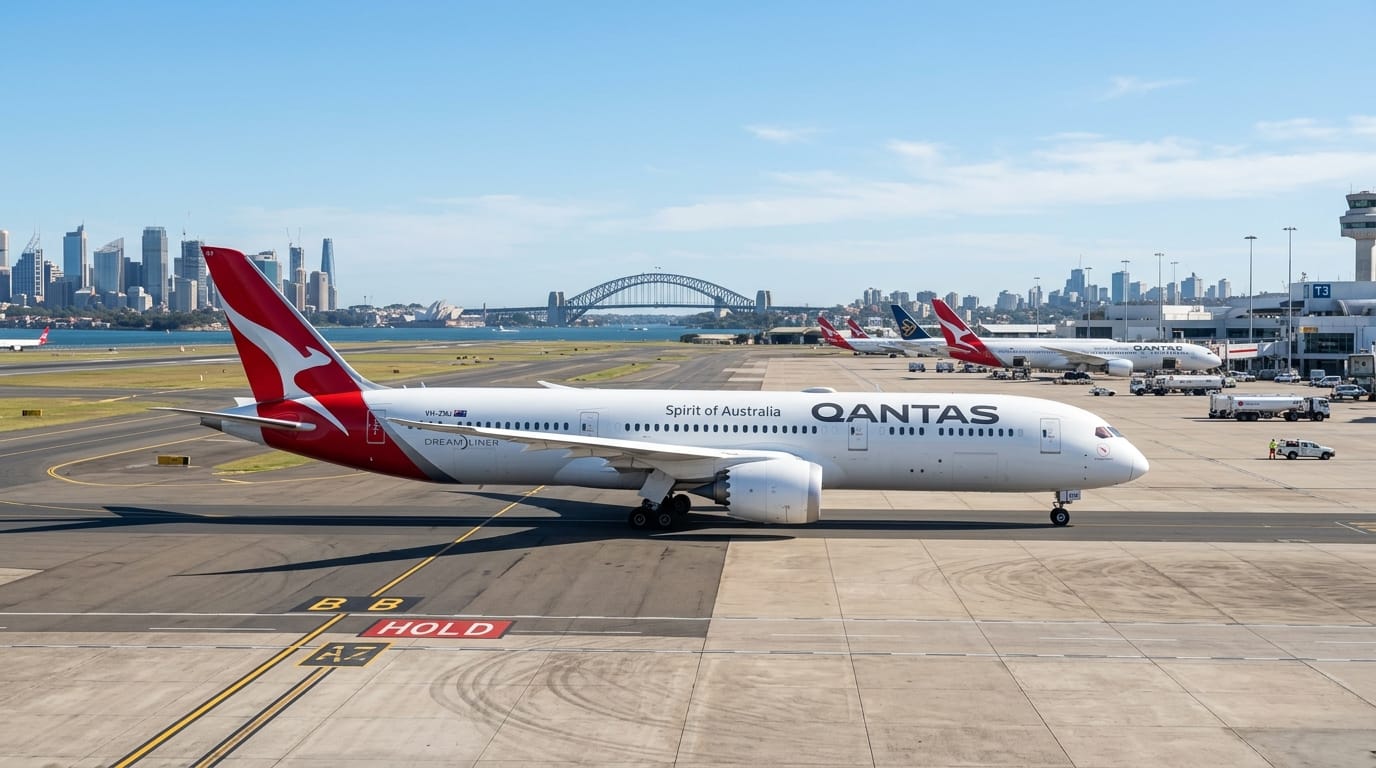
Sydney Airport is Australia’s busiest international gateway, and the range of airlines flying direct from Sydney is broader than most travellers realise. Whether you’re planning a quick hop to Melbourne or a long-haul flight to London, understanding who flies where — and what tradeoffs come with each carrier — saves you time and money before you even open a booking tab.
This guide covers the major airlines operating nonstop routes out of Sydney, the regions they connect, and the practical considerations that should shape your decision.
Australian Carriers Flying from Sydney
Qantas
Qantas operates the widest domestic network from Sydney, connecting to every major Australian city and many regional destinations. Internationally, Qantas flies nonstop from Sydney to destinations including Los Angeles, Dallas Fort Worth, London (via its Project Sunrise ambitions, with verification needed on current operational status), Auckland, Singapore, Tokyo, Hong Kong, and Johannesburg. Their alliance with oneworld partners means frequent flyers can accrue points across a large global network.
The tradeoff: Qantas typically prices at a premium. Their checked baggage allowances and lounge access are generally strong, but fees for changes and extras on sale fares can add up quickly.
Virgin Australia
Virgin Australia focuses primarily on domestic flying from Sydney, covering major capitals and leisure destinations like the Gold Coast, Cairns, and Hobart. International flying is limited compared to its earlier years — verify current international routes before booking, as the network contracted significantly after the airline’s 2020 restructure.
Virgin often competes hard on price against Qantas on domestic trunk routes, making it worth comparing on the Sydney–Melbourne and Sydney–Brisbane corridors in particular.
Jetstar
Jetstar, Qantas’s low-cost subsidiary, flies from Sydney across a mix of domestic and international routes. International destinations have included Bali (Denpasar), Osaka, Tokyo, Honolulu, and various Pacific island destinations. The critical caveat with Jetstar: the base fare rarely reflects your true cost. Checked baggage, seat selection, and meal purchases add up fast, so compare the all-in price rather than the headline number.
International Carriers with Direct Flights from Sydney
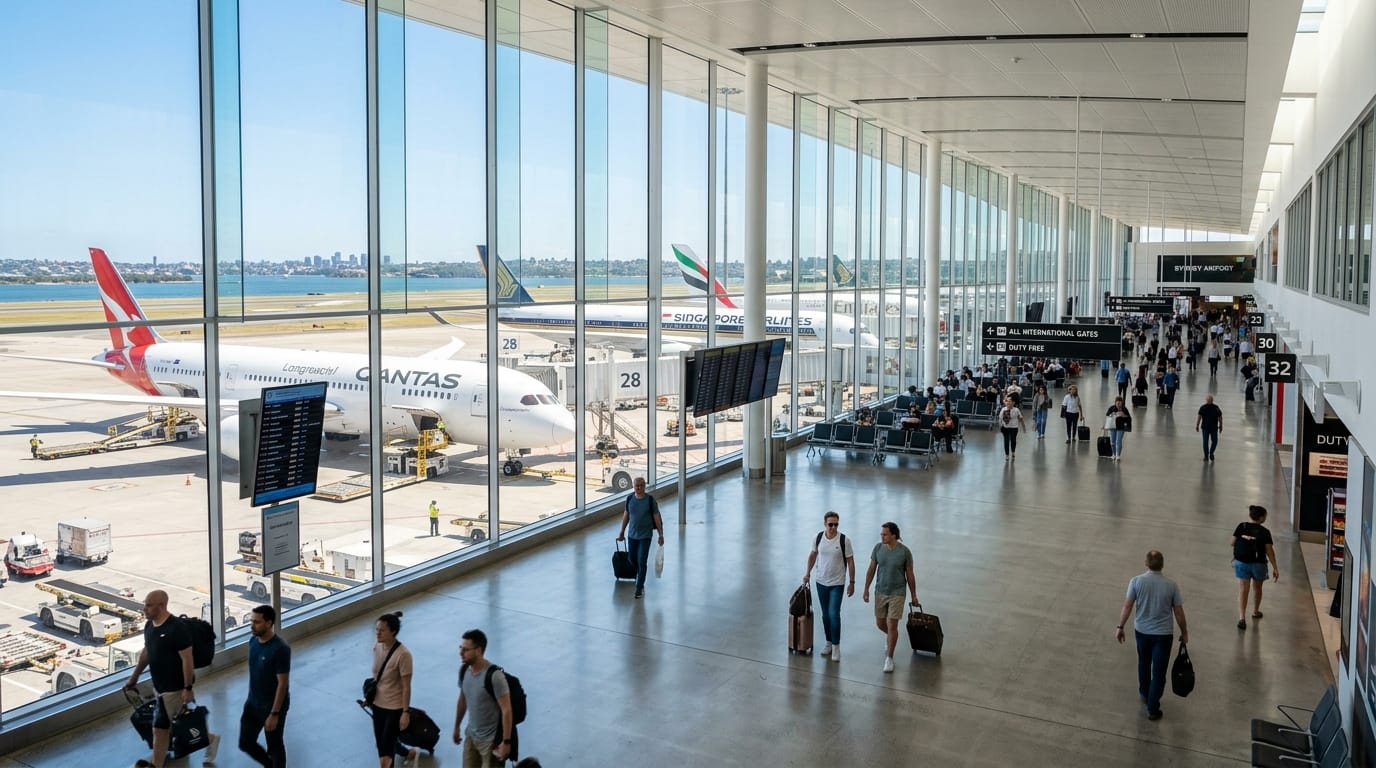
Asia-Pacific Region
Sydney is well served with direct options across Asia. Carriers flying nonstop from Sydney into the region include:
- Singapore Airlines — Sydney to Singapore (Changi), a popular connection point for onward travel to Europe
- Cathay Pacific — Sydney to Hong Kong
- Japan Airlines and ANA — Sydney to Tokyo (Narita and Haneda respectively; verify current schedules)
- Korean Air and Asiana Airlines — Sydney to Seoul (Incheon)
- China Eastern, Air China, and China Southern — Sydney to various mainland Chinese hubs including Shanghai, Beijing, and Guangzhou
- Thai Airways and Bangkok Airways — Sydney to Bangkok
- Malaysia Airlines — Sydney to Kuala Lumpur
- Air India — Sydney to Delhi (verify current operational status)
- Philippine Airlines — Sydney to Manila
- Vietnam Airlines — Sydney to Ho Chi Minh City
Middle East Carriers
The three Gulf airlines all serve Sydney with direct or technically one-stop services. Emirates flies Sydney to Dubai (DXB), one of the more popular connections for travellers continuing to Europe or Africa. Etihad connects Sydney to Abu Dhabi, while Qatar Airways links Sydney to Doha. All three compete aggressively on price for premium cabins and often undercut European carriers on business class to Europe.
North America
United Airlines operates Sydney to San Francisco and Sydney to Los Angeles. American Airlines and Delta also serve the Sydney–Los Angeles corridor. Air New Zealand provides an indirect option via Auckland for travellers willing to connect. These routes are long-haul by definition — expect 14 to 17 hours depending on wind — and aircraft type matters for comfort. The Boeing 787 Dreamliner cabins used on several of these routes are generally better pressurised and more humid than older widebodies.
Europe and Beyond
Truly nonstop flying from Sydney to Europe is rare and recent. Qantas has been developing ultra-long-haul flights (Project Sunrise), and Singapore Airlines’ Sydney–Singapore segment is often the first leg for those connecting to Europe via Changi. Lufthansa, British Airways, and Air France do not currently fly nonstop to Sydney — their passengers connect through hubs.
New Zealand and Pacific Islands
Air New Zealand and Qantas both fly Sydney to Auckland frequently. Fiji Airways connects Sydney to Nadi. Air Vanuatu and Solomon Airlines serve Pacific island routes, though schedules can be infrequent and worth verifying directly. Samoa Airways has operated Sydney to Apia.
Choosing Between Airlines: Practical Tradeoffs

Full-Service vs Low-Cost on Short Haul
On domestic routes like Sydney–Melbourne, the choice is often between Qantas (or Virgin) and Jetstar. If you travel with only a carry-on and can be flexible on timing, a Jetstar fare can be excellent value. Add a checked bag and a seat choice, and the gap narrows fast. Qantas typically offers more schedule frequency and better cancellation handling.
Connections vs Direct on International
A direct flight is not always a nonstop flight. Some airlines market a service as “direct” when it actually makes one stop without a plane change. This is common on Pacific Island routes and some Southeast Asian services. Always check the flight number and whether there is an intermediate stop — it affects travel time significantly.
Alliance Membership and Points
If you’re accumulating frequent flyer points, carrier choice matters. Qantas partners with oneworld (American, British Airways, Cathay Pacific). Virgin Australia partners with Delta and other Velocity program allies. Singapore Airlines is a Star Alliance member. Booking with a partner airline can still earn points on your home program — but earn rates vary widely, so check before assuming.
What to Know About Sydney Airport Before You Book
Sydney Airport has separate domestic and international terminals, and the connection process between them is not as seamless as many travellers expect. If you’re arriving on an international flight and connecting to a domestic service — or vice versa — you need to allow sufficient time for the transfer. For a full breakdown of how the terminals are laid out and how connections actually work in practice, see our guide to Sydney Airport terminals: domestic vs international and how to connect between them.
This matters when selecting airlines because some carriers (like Qantas) operate from both terminals depending on the route, while others are exclusively international. Getting this wrong can mean missing a connection even with what looks like a generous layover on paper.