

Now Reading: 11 Must-Try Street Foods in Bangkok for Foodies in 2026
-
01
11 Must-Try Street Foods in Bangkok for Foodies in 2026

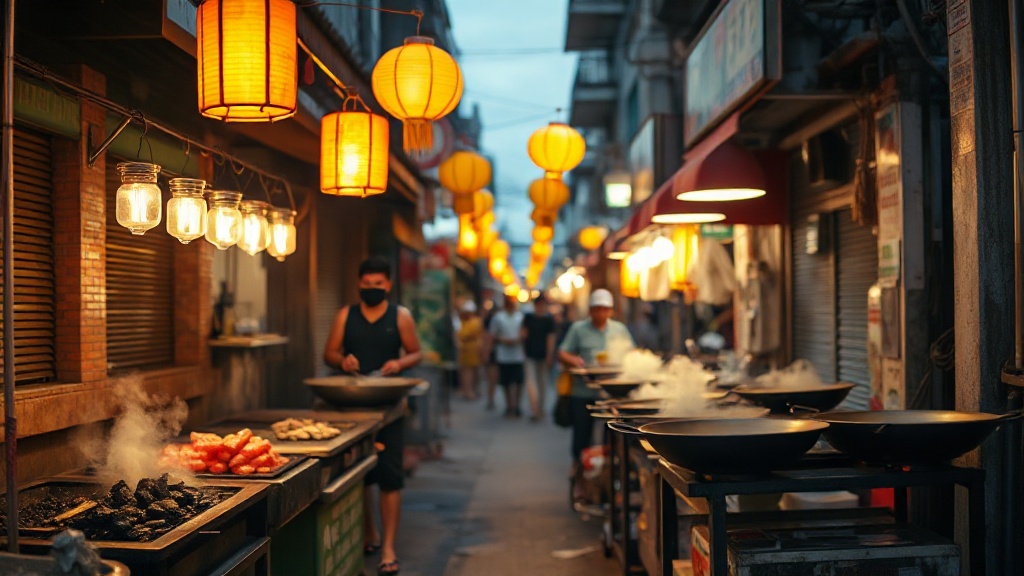
11 Street Foods You Need to Eat in Bangkok in 2026
Bangkok rewards the hungry. A single block near Yaowarat Road or Silom can deliver a full meal, a dessert, and a snack for under $5 — and the quality will outshine restaurants three times the price. I’ve eaten my way through this city more times than I can count, and in 2026, the street food scene is as sharp and exciting as it’s ever been.
Below are 11 dishes that belong on every food-focused itinerary. These aren’t ranked by prestige — they’re ordered roughly by how you’d encounter them moving through a day in Bangkok, from breakfast through late-night.
—
1. Jok (Thai Rice Congee) — The Breakfast That Actually Fills You Up
Start your morning at any wet market open before 7 a.m. and you’ll find jok: a slow-cooked rice porridge topped with a soft-poached egg, minced pork, ginger, and spring onion. It’s gentle, warming, and costs around 40–60 Thai baht (roughly $1–$1.50).
Why it’s worth it: It’s the Thai equivalent of a proper breakfast, not a tourist novelty. The texture is silkier than Chinese congee, and vendors often add a splash of fish sauce and white pepper that lifts the whole bowl.
Tradeoff: If you’re after bold, punchy flavours first thing in the morning, jok will feel subtle. Pair it with a fried dough stick (patongko) to add some crunch.
—
2. Pad Kra Pao (Thai Basil Stir-Fry) — The Dish Bangkokians Actually Eat
Forget pad thai for a moment. Pad kra pao — minced pork or chicken stir-fried with holy basil, chilli, and garlic, served over rice with a fried egg — is what office workers and taxi drivers eat for lunch. You’ll find it at street carts outside BTS Skytrain stations across the city, typically for 60–80 baht ($1.70–$2.30).
The key is holy basil, not the sweet Italian variety. Real holy basil has a slightly peppery, clove-like bite that changes the dish entirely. If it tastes flat, the vendor used the wrong herb.
Where to Find It
- Street carts near Asok BTS station (Sukhumvit Soi 21) serve it from around 11 a.m.
- The Or Tor Kor Market near Chatuchak has vendors running until mid-afternoon.
- Night markets across Silom keep it going past midnight.
—
3. Som Tum (Green Papaya Salad) — Spicier Than You Think
This is the dish that has humbled many confident visitors. Som tum is made to order in a clay mortar: shredded green papaya, lime juice, fish sauce, palm sugar, dried shrimp, tomatoes, and a quantity of fresh bird’s eye chillies that the vendor will ask you about (say “pet nit noi” for mild, or you’ll regret it).
Prices hover around 50–70 baht ($1.40–$2). The Isaan-style version adds fermented crab and fish paste, which is funkier and more complex — worth trying if you’re feeling adventurous.
Honest tradeoff: The fermented versions are genuinely polarising. The smell alone will make the decision for most people. Start with the standard version on your first go.
—
4. Kuay Teow (Noodle Soup) — A Whole Category, Not One Dish
Kuay teow is a family of noodle soups that could easily fill its own article. You’ll find vendors operating from converted carts with giant stock pots, ladling out bowls of clear or dark broth loaded with rice noodles, bean sprouts, and your choice of protein.
The key variations to try:
- Kuay teow ruea (boat noodles): Intensely dark, rich broth. Find it around Victory Monument near the canal, where the original boat vendors used to operate. Around 30–50 baht per bowl.
- Yen ta fo: Pink-hued broth with tofu, squid, and fishballs. Unusual-looking but genuinely delicious.
- Kuay teow khua gai: Dry-fried flat noodles with chicken and egg. Smoky from the wok, served at street stalls in the Chinatown/Yaowarat area.
—
5. Moo Ping (Grilled Pork Skewers) — The Perfect 7 a.m. Snack
You’ll smell these before you see them. Moo ping are pork skewers marinated in coconut milk, garlic, and coriander root, then grilled over charcoal. They’re sold from carts near BTS stations and temple entrances from as early as 6:30 a.m., usually 2–3 skewers for 20–30 baht (under $1).
The best ones have a slightly caramelised exterior from the coconut milk marinade, with juicy meat inside. Eat them with sticky rice sold in small bags by the same vendor — it’s a complete breakfast for $1.50 total.
—
6. Pad Thai — Yes, It’s Still Worth Ordering (If You Pick Right)
I know — it feels like the obvious choice. But a well-made pad thai is genuinely different from the watered-down version you’ve had abroad. The key markers of quality: tamarind-forward sourness (not just sugar), properly dried rice noodles, and wok hei (breath of the wok) that you can taste.
Where to actually get good pad thai in 2026:
- Pad Thai Fai Ta Lu on Dinso Road near Wat Saket — lines form by 5 p.m., portions run out by 8 p.m. Budget around 120–150 baht ($3.50–$4.50).
- Thip Samai on Mahachai Road, open since the 1960s, remains the benchmark. Expect to queue 20–40 minutes on weekdays; double that on weekends.
Tradeoff: Thip Samai’s fame means the queue is real and the price is slightly higher than a standard street cart. If you can’t stomach the wait, any busy local cart near Banglamphu will do the job.
—
7. Khao Man Gai (Poached Chicken Rice) — Comfort Food Done Perfectly
Khao man gai is Bangkok’s version of Hainanese chicken rice: poached chicken over fragrant rice cooked in chicken stock, served with a ginger-garlic dipping sauce, a slice of cucumber, and a small bowl of clear broth on the side.
It’s one of the few dishes where the simplicity is the point. A full plate costs 50–70 baht. Kuang Heng on Pratunam Soi 5 is a long-running favourite, open from early morning until they sell out — usually by early afternoon.
—
8. Hoy Tod (Crispy Oyster Omelette) — A Yaowarat Night Special
Head to Yaowarat Road (Bangkok’s Chinatown) after 7 p.m. and you’ll find vendors making hoy tod: fresh oysters (or mussels) dropped into a starchy egg batter and fried in a smoking-hot wok until the edges are lacy and crisp, with a custardy middle.
Prices range from 80–150 baht ($2.30–$4.30) depending on the vendor and whether you get oysters or the cheaper mussel version. The oyster version is worth the extra baht. Nai Mong Hoi Tod, operating near the Odeon Circle roundabout, has been doing this for decades and the quality holds up.
Tradeoff: The Yaowarat area is loud, crowded, and can be hard to navigate after dark. That’s also exactly what makes it worth going.
—
9. Satay — Better Than Most People Expect
Thai satay differs from its Indonesian and Malaysian cousins: the meat is marinated in turmeric and coconut milk, and the peanut sauce is slightly sweeter and less punchy. Look for vendors grilling over long, narrow charcoal trays in the Silom and Patpong Night Market areas from around 6 p.m.
Five skewers with sauce and cucumber relish: around 50–80 baht ($1.40–$2.30). Not the most exciting dish on this list, but executed well, it’s one of the most satisfying bites in the city.
—
10. Kanom Krok (Coconut Pancakes) — The Dessert You Didn’t Plan For
These are small, half-sphere coconut milk pancakes cooked in a cast-iron pan with dimpled moulds — crispy on the outside, creamy and slightly wobbly in the centre. They’re a street snack, not a proper dessert, and they’re usually done by mid-afternoon.
Find them near Wat Pho on most mornings, or at Or Tor Kor Market on weekends. Six pieces for 20–30 baht. They cool fast, so eat them immediately.
—
11. Mango Sticky Rice (Khao Niew Mamuang) — Seasonal, and Worth Timing Your Trip Around
This is arguably the most famous Thai dessert for good reason: ripe Nam Dok Mai mango, warm glutinous rice, and a drizzle of salted coconut cream. The key word is seasonal. The best mangoes are available roughly from April through June, which is also Bangkok’s hottest period.
If you’re visiting outside that window, you’ll still find mango sticky rice year-round, but the mango quality drops significantly. At peak season, vendors near Chatuchak Weekend Market and along Sukhumvit Soi 38 serve it for 80–120 baht ($2.30–$3.50) with mangoes so ripe they’re almost liquid.
Tradeoff: Visiting Bangkok in April–May means heat above 35°C (95°F) most days. You’re trading comfort for the best possible mango. Most people who’ve done it say it’s worth it.
—
Practical Tips for Eating Street Food in Bangkok in 2026
Getting around the food areas:
- BTS Skytrain and MRT get you to Silom, Sukhumvit, and Chatuchak easily. For Yaowarat, take the MRT to Hua Lamphong or Wat Mangkon stations.
- Budget around $10–$15 USD per day if you’re eating exclusively street food — and eating well.
What to drink:
- Thai iced milk tea (cha yen) from a street cart costs 20–30 baht and pairs with almost everything spicy.
- Stick to bottled water or drinks from sealed containers.
Best times to visit for street food specifically:
- October–February is peak tourist season with cooler temperatures (25–30°C).
- April–June for mango season, as noted above.
- Avoid major Thai holidays like Songkran (mid-April) if crowds are a concern — though the energy is electric if you can handle it.
One honest note on food safety: Bangkok’s street food scene is generally safe if you’re eating from high-turnover stalls where food is cooked to order in front of you. Avoid pre-cooked dishes sitting in trays under heat lamps for unknown amounts of time, especially in the mid-afternoon heat.
—
Your Next Step
Before you land at Suvarnabhumi Airport (BKK) or Don Mueang Airport (DMK), pull up Google Maps and save a list of the specific spots mentioned here — Thip Samai, Nai Mong Hoi Tod, Kuang Heng, and Or Tor Kor Market are all pinned and well-reviewed. Cross-reference with the app Eatigo for Bangkok restaurant bookings, or the Wongnai app (Thailand’s equivalent of Yelp) to find current vendor hours, since street stalls do move and close seasonally. Then show up hungry.
Stay Informed With the Latest & Most Important News
Previous Post
Next Post














Advertisement